
Photophobia is severe light sensitivity that makes ordinary light feel painful or uncomfortable. It is most often caused by dry eye disease, eye inflammation such as iritis or uveitis, corneal injury, migraine, cataract, or recent eye surgery. Treatment depends on the underlying cause, since photophobia is a symptom rather than a disease in itself.
Mild sensitivity to sunlight is common and usually harmless. Persistent or severe photophobia is different, and it almost always points to an underlying condition that needs proper evaluation at an Eye Hospital in Mumbai rather than being managed with sunglasses alone.
"When a patient describes light as painful rather than just uncomfortable, that is a clinical signal worth taking seriously. Photophobia is rarely the whole story. There is almost always a condition underneath driving it, and finding that condition is what brings the relief."
— Dr. Vaishal Kenia, Chairman and Medical Director, Kenia Eye Hospital
What Is Photophobia?
Photophobia describes a heightened sensitivity to light that causes physical discomfort or pain. It is not a fear of light, despite the name. The discomfort can range from mild squinting in sunlight to a sharp, disabling pain that forces the patient to close their eyes even indoors.
The condition can appear in three broad patterns:
- Sudden onset, often after an eye injury, infection, or surgery.
- Long-standing sensitivity that builds over weeks, usually tied to dry eye disease or chronic inflammation.
- Episodic photophobia, where light sensitivity flares with migraines, cluster headaches, or autoimmune conditions.
Each pattern points to a different underlying cause, which is why a careful eye examination is the first real step toward treatment.
Experiencing painful light sensitivity? Book a complete eye assessment with a specialist. Book an Appointment
What Causes Severe Light Sensitivity?
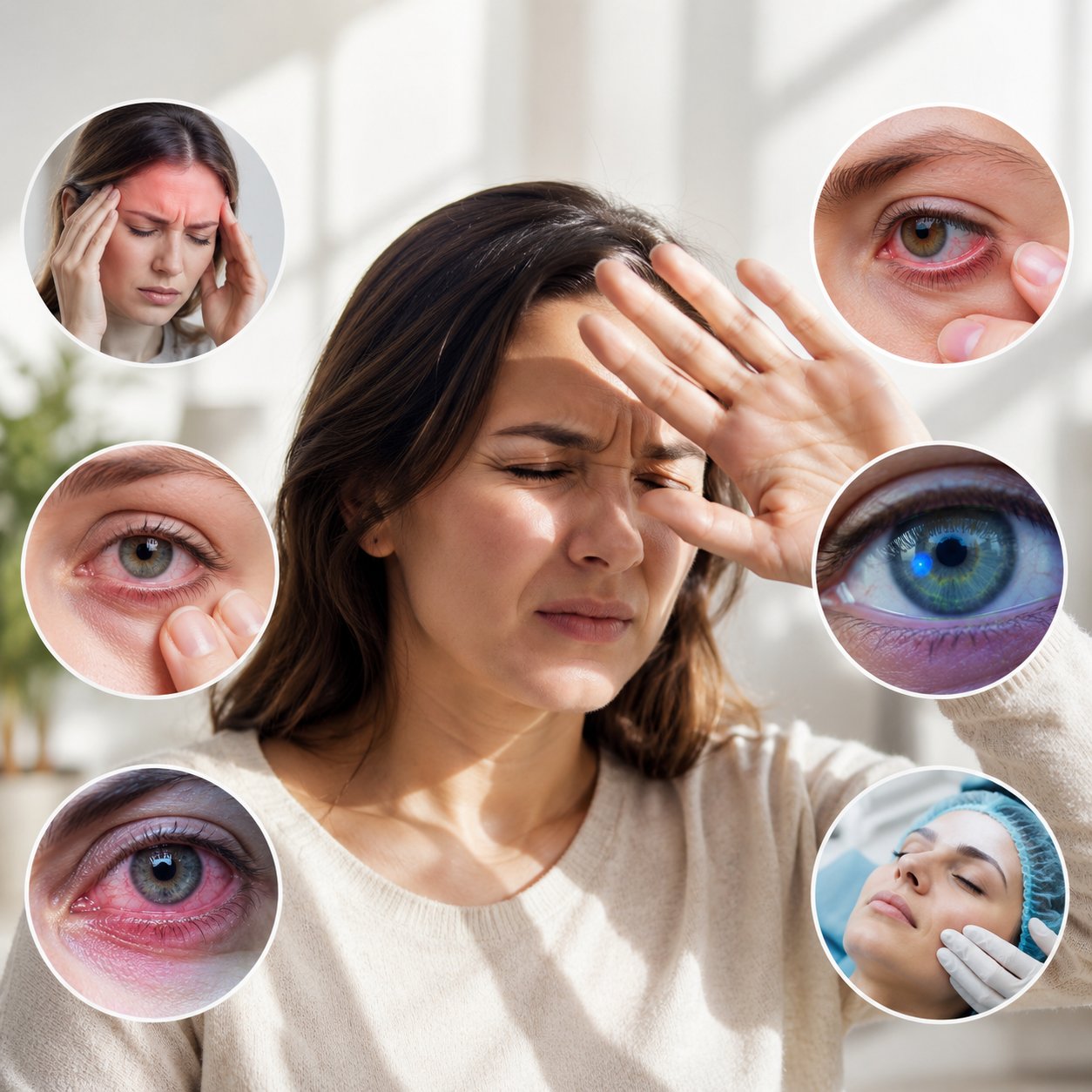
Photophobia has a wide list of possible causes, ranging from common surface problems to deeper neurological issues. Most cases fall into one of the categories below.
- Dry eye disease. A poor or unstable tear film leaves the corneal nerves exposed and over-reactive to light. This is one of the most common causes seen at any eye clinic.
- Corneal inflammation or injury. Conditions such as keratitis, corneal abrasions, or ulcers make the eye intensely sensitive to light, often with pain and redness.
- Iritis and uveitis. Inflammation inside the eye is a classic cause of severe photophobia, usually with pain, blurred vision, and a red eye.
- Migraine and cluster headaches. Neurological photophobia is well documented and tends to flare with headache episodes.
- Cataract. As the lens clouds, light scatters inside the eye, leading to glare, halos, and increased sensitivity.
- Post-surgical recovery. Photophobia is normal for a short period after cataract surgery, LASIK, or other eye procedures.
- Albinism and aniridia. Less common, but congenital causes of lifelong light sensitivity due to lack of pigment or iris tissue.
- Medications. Drugs such as tetracyclines, certain antihistamines, and some glaucoma drops can increase light sensitivity.
If glare, halos, or sensitivity have started to disturb night driving or screen use, our guide on optic nerve damage from glaucoma explains how subtle visual symptoms can sometimes overlap with other eye conditions and why early checks matter.
What Are the Symptoms That Come With Photophobia?
Photophobia rarely appears alone. The pattern of symptoms around it usually points to the underlying cause and helps the doctor decide what to examine first.
Common accompanying symptoms include:
- Eye pain or a deep ache, especially with iritis or corneal injury.
- Excessive tearing, often seen in dry eye or surface inflammation.
- Blurred vision, which suggests something more than surface sensitivity.
- Headache or nausea, common when photophobia is migraine-related.
- Redness or visible inflammation, pointing toward keratitis, conjunctivitis, or uveitis.
- Halos and glare, often associated with cataract or refractive issues.
The combination of these clues, gathered together, is often more useful than any single symptom for diagnosis.
Light sensitivity affecting your daily life? Schedule a comprehensive evaluation today. Book an Appointment
How Is Photophobia Diagnosed?

There is no single test for photophobia itself. The diagnostic process is built around finding what is causing it, and that requires a structured eye examination.
- History taking to map when the sensitivity started, what makes it worse, and what other symptoms come with it.
- Slit-lamp examination to inspect the cornea, iris, and anterior chamber for inflammation, injury, or scarring.
- Tear film assessment to check for dry eye disease, which is one of the most common drivers of chronic photophobia.
- Intraocular pressure check to rule out conditions like acute glaucoma.
- Dilated retinal examination when neurological or deeper causes are suspected.
In some cases, imaging tests such as optical coherence tomography are used to check the nerve fibre layer and rule out retinal or optic nerve involvement. The goal is to be confident about the cause before starting treatment, since each underlying condition needs a different approach.
How Is Photophobia Treated?
Treatment depends entirely on what is driving the sensitivity. There is no single drop or pill that treats photophobia in isolation.
| Underlying Cause | Typical Treatment |
|---|---|
| Dry eye disease | Lubricating drops, lid hygiene, treatment of meibomian gland dysfunction |
| Iritis or uveitis | Steroid drops, dilation drops to ease pain, treatment of any systemic cause |
| Corneal injury or keratitis | Antibiotics, lubrication, patching where appropriate |
| Migraine-related | Migraine management, tinted lenses, lifestyle adjustments |
| Cataract-related glare | Updated glasses, cataract surgery when ready |
| Post-surgical | Time, prescribed drops, photochromic glasses for comfort |
Alongside specific medical treatment, sunglasses with proper UV protection, anti-glare lenses, and avoiding harsh fluorescent lighting can all help reduce day-to-day discomfort. For patients with cataract-related glare that no longer responds to glasses, cataract surgery in Mumbai often removes the problem entirely by replacing the clouded lens.
When Should You See a Doctor for Photophobia?
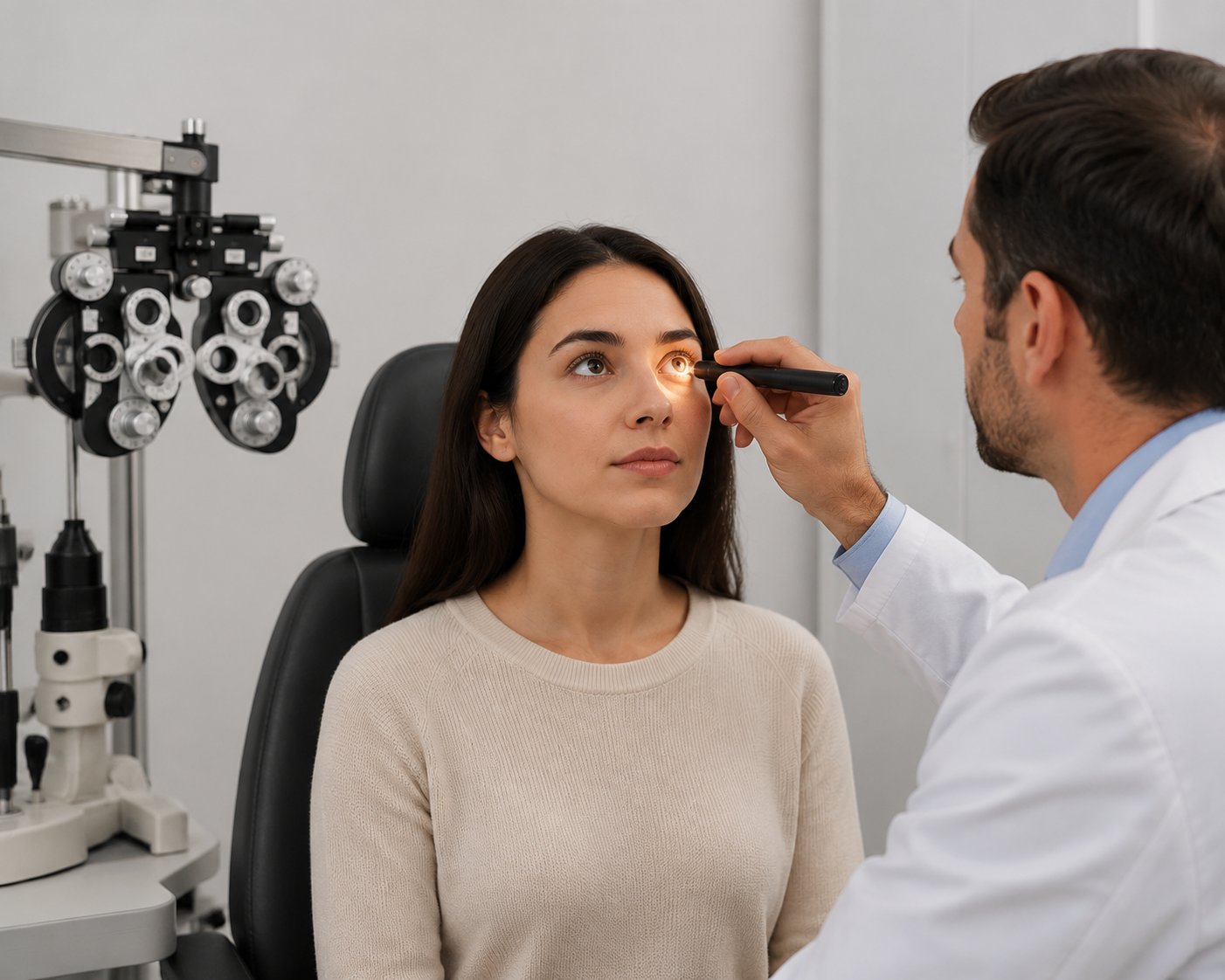
Mild, occasional sensitivity to bright sunlight is normal. The following signs mean it is time for a proper evaluation rather than a wait-and-watch approach.
- Light sensitivity that has lasted more than a few days.
- Sensitivity that comes with eye pain, redness, or blurred vision.
- A sudden onset after an eye injury or any kind of trauma.
- Halos, glare, or difficulty driving at night.
- New light sensitivity alongside headaches or nausea.
- Worsening of an existing dry eye or contact lens-related condition.
Acute photophobia with severe pain or sudden vision loss should be treated as an emergency rather than a routine appointment.
Why Choose Kenia Eye Hospital for Photophobia Evaluation?
Photophobia can come from the eye surface, the inside of the eye, or even the brain, which is why diagnosis depends on having both the right equipment and an experienced clinician interpreting it. Kenia Eye Hospital brings 28 years of experience to evaluating complex eye symptoms, supported by a full range of diagnostic tools including slit-lamp imaging, tear film analysis, and OCT.
Patients receive a clear explanation of what is driving their light sensitivity, alongside a treatment plan that targets the underlying condition rather than masking the symptom. That careful, evidence-led approach is what places Kenia among the best eye hospital in Mumbai choices for patients with persistent or unexplained light sensitivity.
Find out what's behind your light sensitivity with a proper expert evaluation. Book an Appointment or call +91 75064 99962
