
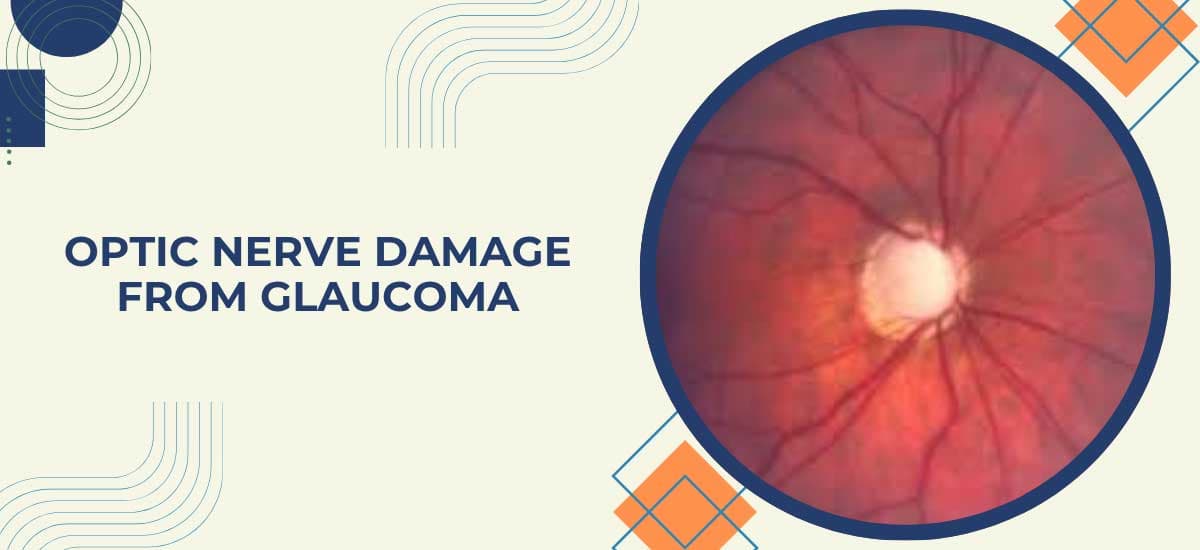
Glaucoma is a group of eye diseases that permanently damage the optic nerve, the bundle of fibres connecting your eye to your brain. Optic nerve damage from glaucoma happens when fluid builds up inside the eye, raises the intraocular pressure (IOP), and slowly destroys those fibres. The damage is painless and irreversible, and it usually affects side vision long before it becomes noticeable.
Catching it early changes the outcome entirely. A pressure check at a properly equipped Eye Hospital in Mumbai can pick up the problem while vision is still fully intact, which is the whole reason glaucoma screening exists.
"By the time most patients reach me, they have already lost vision they did not know was gone. Glaucoma gives no pain and no blur in its early years, which is exactly why a yearly pressure check matters more than waiting for a symptom." - Dr. Vaishal Kenia, Chairman and Medical Director, Kenia Eye Hospital
What Does Glaucoma Actually Do to the Optic Nerve?
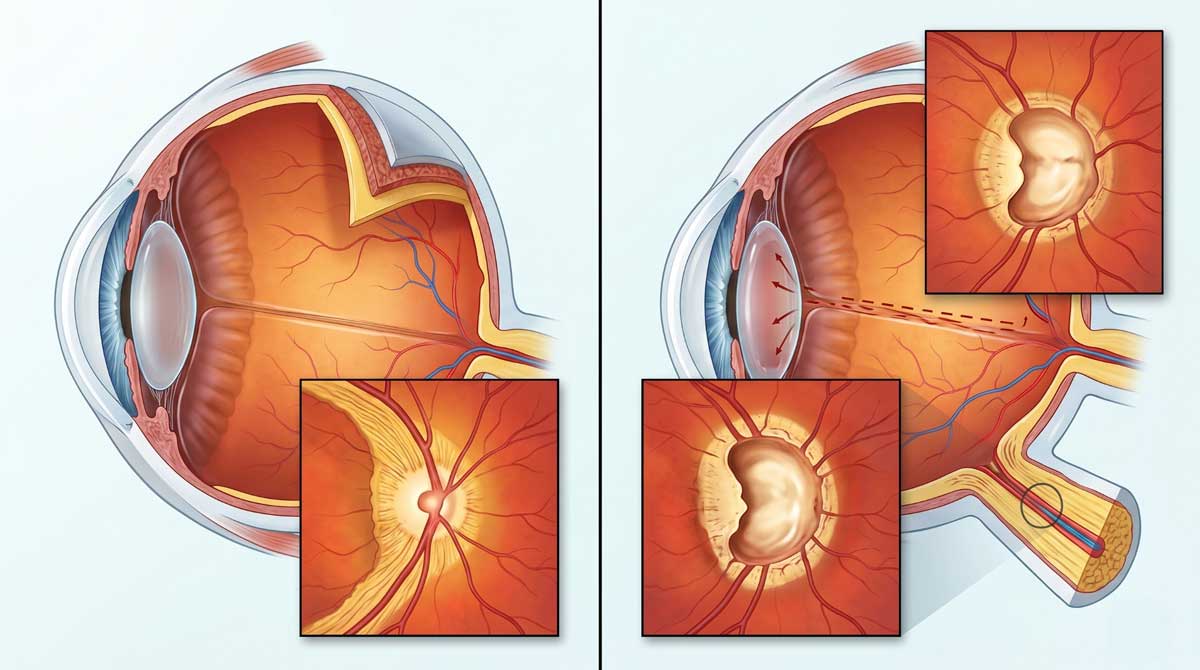
The optic nerve carries more than a million retinal nerve fibres, and every image your eye records travels along it to the brain. Glaucoma wears that bundle down a few fibres at a time, which is why the change is so easy to miss.
- The cupping effect: Dying fibres leave the centre of the nerve hollow and widened. Ophthalmologists call this cupping, and it often shows on examination before a patient reports a single symptom.
- Blind spots follow: Each lost fibre removes a small patch of the visual field, usually starting in the periphery rather than the centre.
- The loss is fixed: Optic nerve tissue does not regenerate, so vision tied to damaged fibres cannot be restored.
The "silent thief of sight" label fits for a reason. With no pain and central vision holding steady well into the disease, most patients only discover the problem once a meaningful share of their sight is already gone.
Concerned about your eye pressure? Schedule a complete glaucoma evaluation with a specialist. Book an Appointment
What Are the Different Types of Glaucoma?
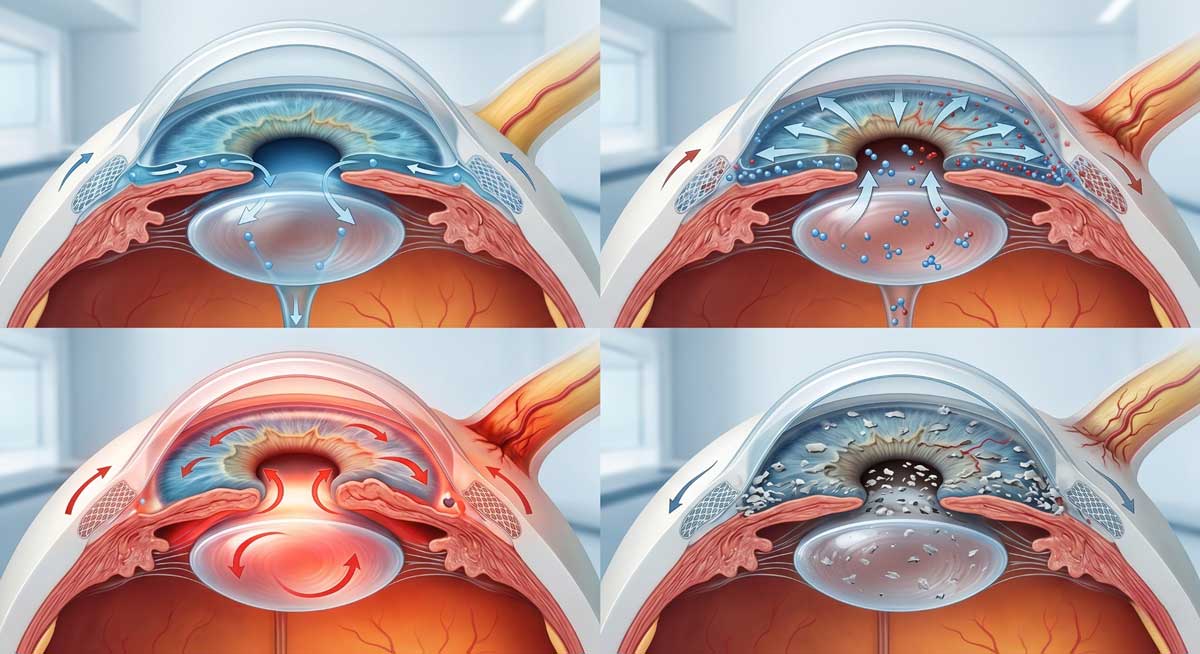
Glaucoma is not one disease but several, and the type a patient has decides both how fast it moves and how urgently it needs treating.
- Open-angle glaucoma accounts for most cases. Fluid drains too slowly, eye pressure climbs over years, and there is no early warning to act on.
- Angle-closure glaucoma behaves very differently. Drainage is blocked abruptly, the eye becomes painful and red, and the situation is a genuine emergency.
- Normal-tension glaucoma is the puzzling one. Damage occurs despite normal pressure readings, frequently linked to poor blood supply to the nerve.
Same name, three separate problems. An eye examination is the only way to establish which version a patient is dealing with.
What Are the Early Signs of Optic Nerve Damage?
Early glaucoma is, for most people, completely symptomless, and that is precisely what makes it dangerous. The signs that eventually surface are subtle enough to be blamed on tiredness or age.
- Side vision narrowing without explanation. Patients describe clipping doorframes or missing objects placed slightly off-centre.
- A field of view that feels gradually tunnelled, developing over months rather than days.
- Poorer vision in low light, and night driving that has become noticeably harder.
- Sudden pain with halos around lights. This points to acute glaucoma and needs care the same day.
Because the brain fills in missing patches, side vision is almost impossible to self-assess accurately. Our guide on peripheral vision loss covers the early clues that tend to go unnoticed.
How Is Optic Nerve Damage From Glaucoma Diagnosed?
Eye pressure cannot be felt, and the optic nerve cannot be inspected without instruments, so diagnosis relies on a short set of painless tests carried out by an ophthalmologist.
- Tonometry to measure intraocular pressure.
- A direct examination of the optic nerve head for cupping or thinning.
- Nerve fibre layer scans, which flag loss before symptoms appear.
- Visual field testing to chart side vision and expose hidden blind spots.
For early detection, the test that carries the most weight is optical coherence tomography, a high-resolution scan of the retinal nerve fibre layer. Repeated across visits, it shows whether the condition has settled or is still advancing, and that trend decides what treatment is needed.
Can Optic Nerve Damage From Glaucoma Be Treated?
Lost vision cannot be brought back. What treatment can do is protect every fibre still working, and on that front the results are good. All glaucoma treatment shares one objective, which is lowering the pressure inside the eye.
- Eye drops reduce fluid production or improve its drainage. They are effective, with one condition attached: they only work when used every day, on schedule.
- Laser procedures such as selective laser trabeculoplasty restore some function to the drainage channels, and in many patients they cut down the drop burden or remove it altogether.
- Surgery is the next step once drops and laser stop holding pressure at a safe level.
A recommendation for Glaucoma Eye Surgery in Mumbai usually signals that medication has reached its limit, and that preventing further vision loss now depends on a longer-lasting solution.
Is Glaucoma Surgery Better Than Eye Drops?
There is no single winner here. The better choice depends on how advanced the glaucoma is and how the eyes have responded to treatment so far.
| Feature | Eye Drops | Glaucoma Surgery |
|---|---|---|
| Main goal | Daily pressure control | Long-term pressure control |
| How it works | Reduces fluid or aids drainage | Creates a new drainage channel |
| Effort needed | Daily, lifelong, on schedule | One procedure, then monitoring |
| Best suited for | Early to moderate glaucoma | Advanced or fast-progressing cases |
| Main drawback | Easy to miss doses | Short surgical recovery period |
Drops carry many patients comfortably for years. Others reach a point where surgery is the sounder long-term decision. Which group a patient falls into is something only a specialist assessment can settle.
Noticing changes in your side vision? Do not wait for the condition to worsen. Book an Appointment
When Should You See a Doctor for Glaucoma?
Some patients should not wait for a routine appointment. Arrange an eye check if any of the following describe you.
- Glaucoma in a parent or sibling, which raises personal risk several times over.
- Age above 40, with the risk climbing through each later decade.
- Diabetes, high blood pressure, or a strong short-sighted prescription.
- A past eye injury, or long-term steroid use.
- Any change in side vision, even a slight one.
For everyone else, a yearly eye pressure test after 40 is still worth the few minutes it takes, given how much vision early detection can preserve.
Why Choose Kenia Eye Hospital for Glaucoma Care?
The choice of where to be examined matters as much as the decision to be examined at all. Kenia Eye Hospital brings 28 years of experience to diagnosing and managing glaucoma at every stage, supported by imaging precise enough to catch the disease early.
Patients leave the first consultation knowing exactly where their condition stands, with a plan shaped around how much vision can still be saved. That pairing of long clinical experience and accurate diagnosis is what places Kenia among the best eye hospital in Mumbai choices for glaucoma care that lasts.
Protect your vision before glaucoma takes more of it. Book an Appointment or call +91 75064 99962.
