
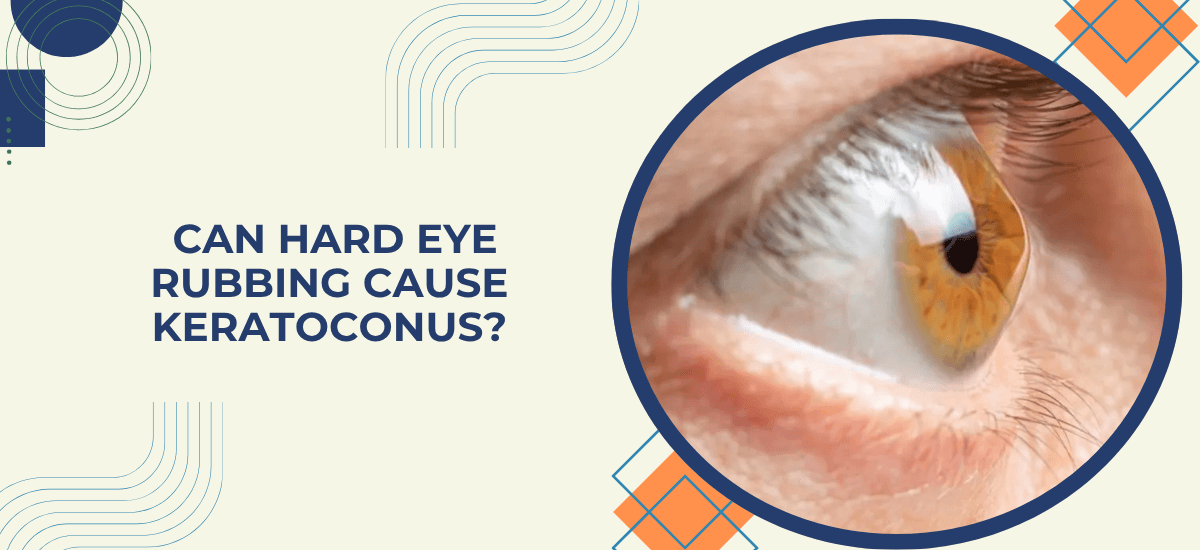
Yes and it's not some far fetched theory either, the mechanics behind it actually hold up. Genetics decide how weak or susceptible a cornea starts out, that part's basically fixed from birth. What isn't fixed, though, is how hard someone rubs their eyes, and that's exactly the piece that turns "at risk" into "actually developing keratoconus." It's rarely one rough rub that does it. It's the accumulation, night after night, year after year, of pressing hard enough that the cornea slowly reshapes itself into something it was never meant to be.
Dr. Vaishal Kenia, Chairman and Medical Director at Eye Hospital in Mumbai, sees this pattern constantly with allergy patients. "Someone comes in with itchy eyes, allergies or dry eye usually, and they've been rubbing hard for relief without thinking twice about it. Turns out that habit's doing more to drive their keratoconus than their genes ever would have alone. Half the time patients don't even realize how much they rub, it's become totally automatic. Once we point it out and they actually stop, that alone slows the disease down more than people expect."
How Does Eye Rubbing Actually Cause Keratoconus?
- Mechanical pressure wears down the cornea's structure bit by bit. Collagen fibers hold the cornea's shape in a specific arrangement, and repeated hard pressure breaks that arrangement down over time, thinning things out until the cornea starts bulging into that telltale cone shape.
- Usually there's something else driving the rubbing in the first place, allergies, dry eye, take your pick. Allergic conjunctivitis, chronic dryness, even eczema around the eyes, all of it ramps up how much someone rubs, and that rubbing is really what's raising the keratoconus risk indirectly.
- It's not the light, occasional rub that does the damage, to be clear. It's the hard, knuckle deep, sustained kind, often happening half asleep or right when someone wakes up, night after night, that actually causes the structural wear.
- Genetics still set the starting line here. Someone with keratoconus in the family who also rubs hard is stacking two real risk factors on top of each other, which is exactly why doctors ask about both family history and rubbing habits during an evaluation.
What Are the Warning Signs, and What Should You Do Instead?
- Vision that keeps blurring or distorting, forcing glasses prescriptions to change more often than they should, is often one of the earliest tells that the cornea's shape is shifting. Normal vision changes don't usually behave this restlessly.
- Glare or light sensitivity getting worse, especially at night, tends to show up as the cornea distorts how light hits it. Pentacam HR imaging can catch this kind of distortion early on, sometimes well before it's obvious in a regular exam.
- Treating whatever's actually causing the itch matters just as much as breaking the rubbing habit itself. A ME-Check / SBM dry eye evaluation can pin down what's really behind the irritation, so it's the root cause getting fixed instead of just papering over the symptom.
- If keratoconus is already moving along, there are real options to actually stop it in its tracks. Keratoconus treatment here covers collagen cross-linking and other approaches built specifically to halt progression, not just correct vision after the damage is done.
Why Choose Kenia Eye Hospital?
Kenia Eye Hospital's been around in Santacruz (West), Mumbai since 1998, and keratoconus cases get tracked with actual imaging data here, not guesswork. Pentacam HR mapping lets the team watch exactly how a cornea's shape is shifting over time, which matters a lot for catching things early and knowing when it's time to step in.
NABH, QAI, and FEQH accredited. CGHS empanelled. Call +91 75064 99962 or book a consultation if your vision's been changing fast or you've caught yourself rubbing your eyes more than you'd like to admit.
