
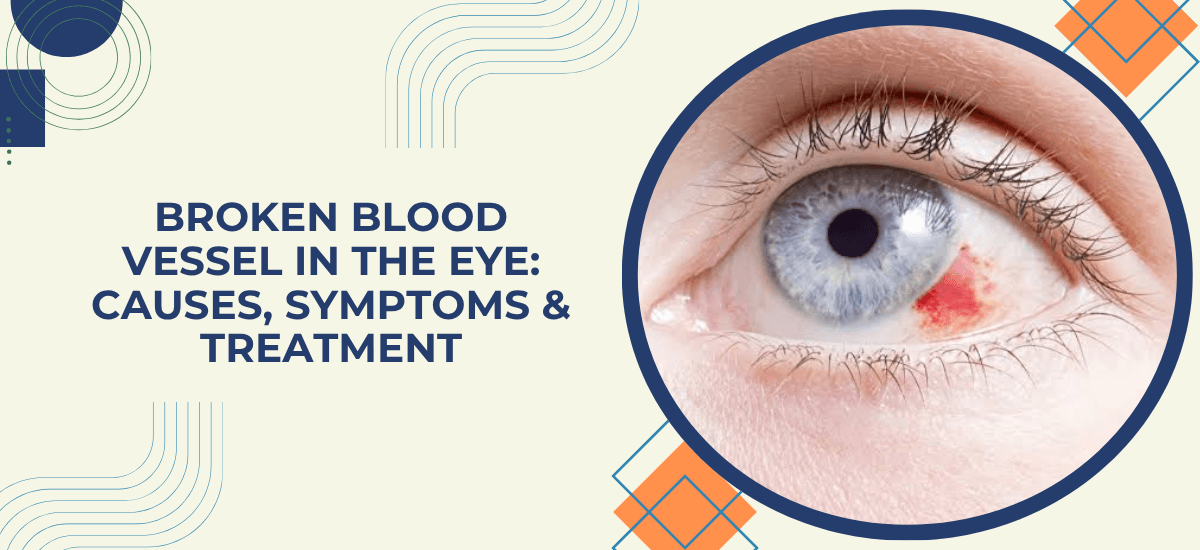
A broken blood vessel in the eye, medically called a subconjunctival hemorrhage, happens when a small blood vessel beneath the conjunctiva bursts and leaks blood onto the white of the eye. It is most often caused by something as simple as a strong sneeze, forceful coughing, straining, or rubbing the eye, though high blood pressure, diabetes, and blood thinning medications can make it more likely. Treatment usually isn't needed since the blood is reabsorbed naturally over one to two weeks, though the cause is worth understanding since it occasionally points to something that needs attention.
A single red patch that appears without pain or vision change is common and almost always harmless. A hemorrhage that keeps recurring, comes with pain, or affects your vision is different, and it needs proper evaluation at an Eye Hospital in Mumbai rather than being dismissed as the usual broken blood vessel.
"Patients are almost always more alarmed by how a subconjunctival hemorrhage looks than by anything it's actually doing to the eye. It's usually completely harmless. What I do want to know is whether it's happened before, and whether their blood pressure has been checked recently, because recurring hemorrhages are sometimes the eye telling us something about blood pressure or blood thinners rather than about the eye itself."
— Dr. Vaishal Kenia, Chairman and Medical Director, Kenia Eye Hospital
What Is a Broken Blood Vessel in the Eye (Subconjunctival Hemorrhage)?
The conjunctiva, the clear membrane covering the white of the eye, contains many tiny blood vessels, and when one of these vessels breaks, blood leaks into the space between the conjunctiva and the sclera, causing a bright red patch that can look alarming but doesn't involve the deeper structures of the eye.
Subconjunctival hemorrhage generally falls into two categories. Traumatic hemorrhages result from a direct injury to the eye, forceful rubbing, or an accident, and tend to look more localised. Spontaneous hemorrhages occur without any obvious injury and are often linked to sneezing, coughing, straining, or an underlying condition like high blood pressure, usually appearing more diffuse across the eye.
Because the bleeding sits on the surface rather than inside the eye, vision isn't affected in either case, which is one of the most reassuring facts about this condition.
Noticed a red patch in your eye and want it checked properly? A quick exam brings peace of mind. Book an Appointment
What Causes a Broken Blood Vessel in the Eye?
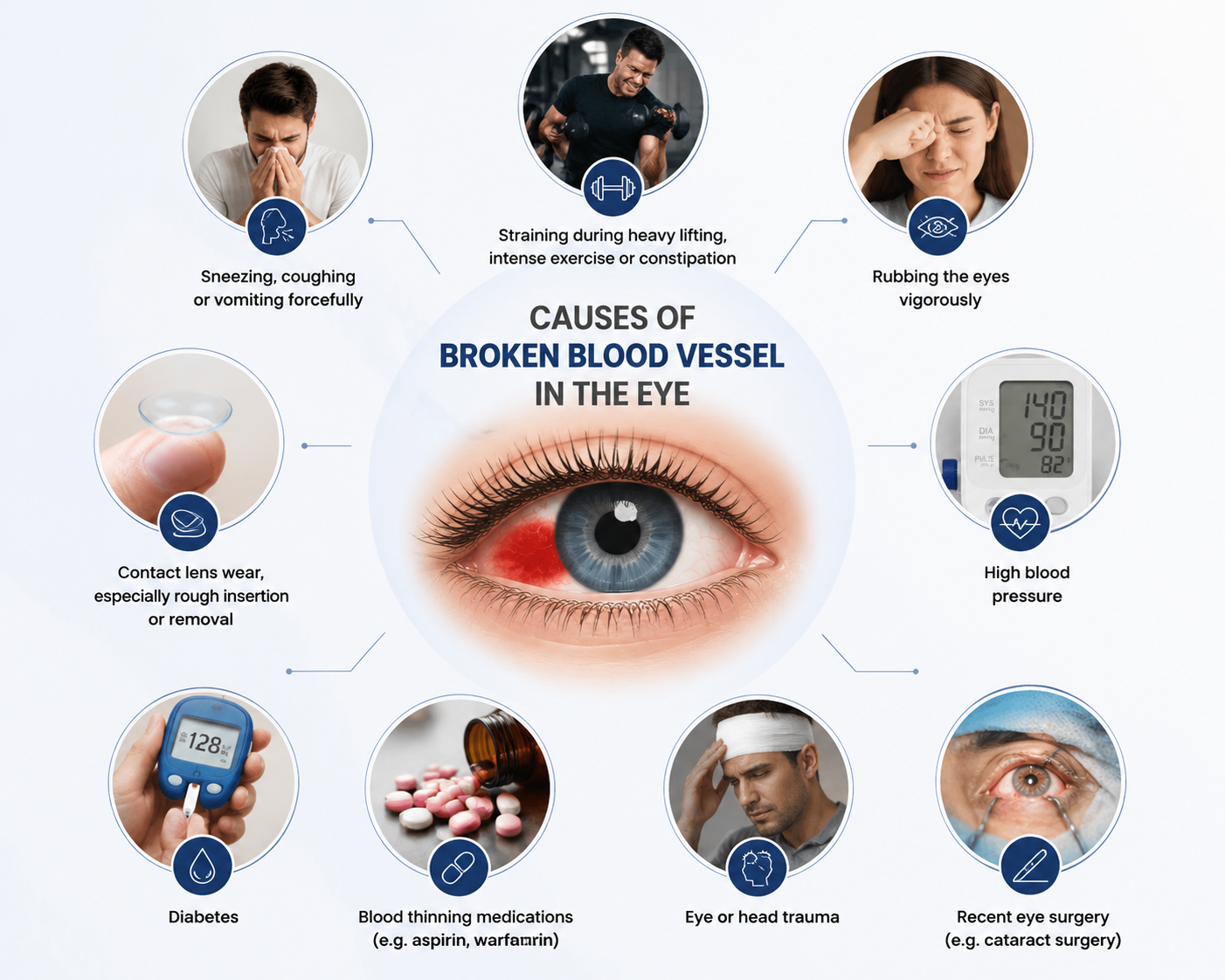
Most cases trace back to a moment of sudden pressure or strain, though some are linked to longer term health factors that make the vessels more fragile in the first place.
Sneezing, coughing, or vomiting forcefully can briefly raise pressure in the blood vessels around the eyes, and straining during heavy lifting, intense exercise, or constipation works the same way. Rubbing the eyes vigorously can directly rupture a surface vessel, and contact lens wear can do the same, particularly with rough insertion or removal.
A few underlying conditions also raise the odds of this happening. High blood pressure weakens blood vessels and makes them more prone to breaking, and diabetes has a similar effect through its broader impact on blood vessel health. Blood thinning medications such as aspirin or warfarin increase the likelihood of visible bleeding even from minor strain, and eye or head trauma can cause it too, though this usually warrants a fuller eye examination rather than reassurance alone. Mild bleeding on the surface is also a recognised, usually harmless side effect of recent eye surgery, such as cataract surgery.
If a recent injury is involved rather than a spontaneous cause, our guide on black eye symptoms and treatment covers how to tell when trauma needs a more thorough eye examination.
What Are the Symptoms of a Subconjunctival Hemorrhage?
The appearance is usually far more dramatic than the symptoms themselves, which is part of what makes this condition so often mistaken for something more serious.
The main sign is a bright red patch on the white of the eye, sometimes covering a small area and sometimes spreading across most of the sclera. There's usually no pain, which is one of the most reliable signs this is a straightforward subconjunctival hemorrhage, and no change in vision either, since the bleeding stays on the surface and doesn't involve the eye's internal structures. Some people notice mild irritation or a scratchy sensation, though this is usually minor when it happens at all. Over the following one to two weeks, the patch gradually changes colour, fading from bright red to orange and then yellow as it heals.
If pain, vision change, or discharge accompanies the red patch, it has moved outside the typical pattern and deserves a proper look.
Not sure if your red eye is just a broken blood vessel or something more? A quick check settles it. Book an Appointment or call +91 75064 99962
How Is a Broken Blood Vessel in the Eye Diagnosed?
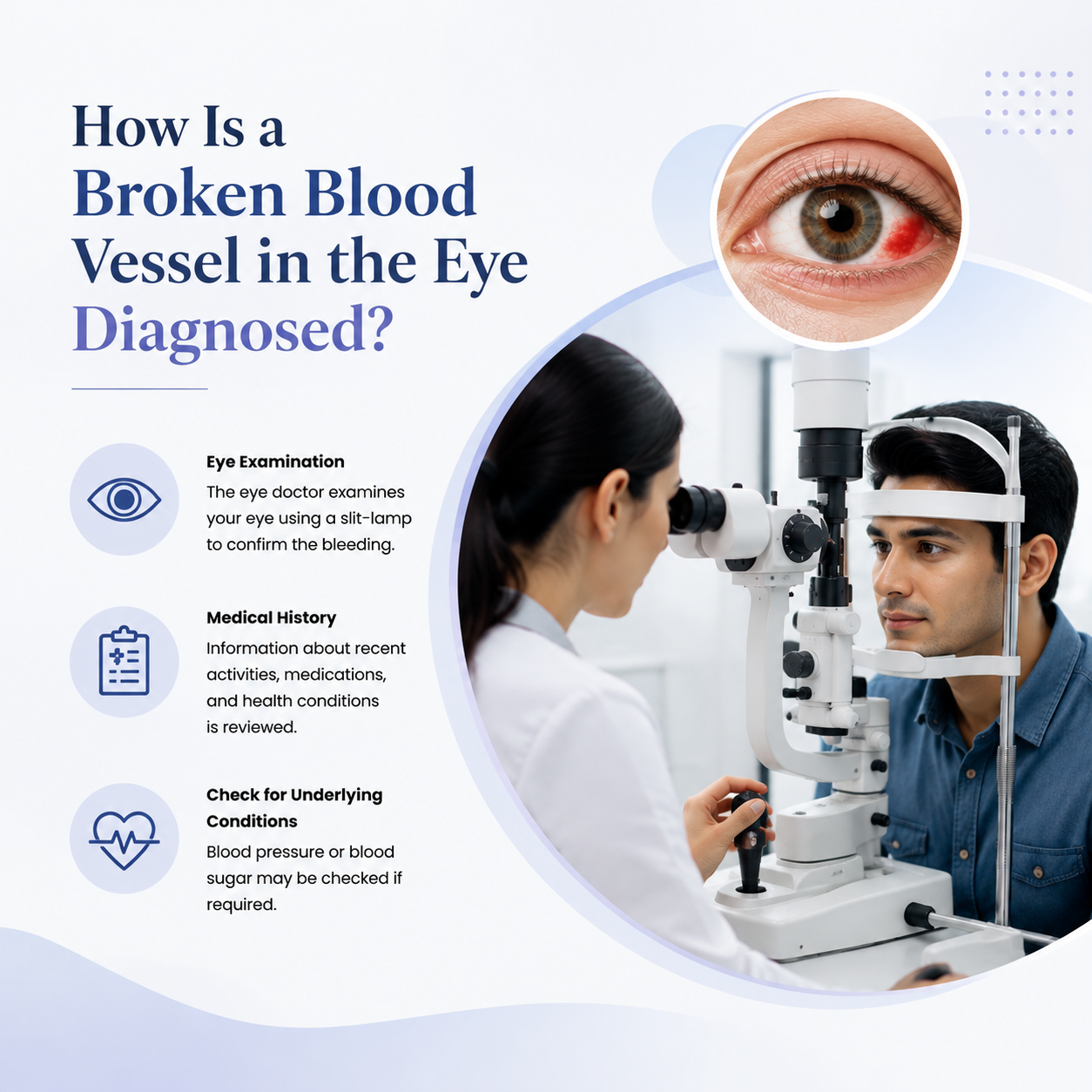
Diagnosis is usually straightforward and based on how the hemorrhage looks, though recurring cases call for a closer look at what might be driving them.
In most cases, a visual examination is enough to confirm a subconjunctival hemorrhage, since the appearance alone is fairly distinctive. Your doctor will usually ask about any recent straining, coughing, trauma, or medication use as part of the history, and for patients with recurrent or unexplained hemorrhages, a blood pressure check is often the next step. Blood tests are considered in cases of frequent recurrence, mainly to rule out a clotting disorder or other underlying condition.
A first time, isolated hemorrhage with no other symptoms rarely needs more than a visual confirmation and reassurance.
How Is a Broken Blood Vessel in the Eye Treated?
Treatment depends less on the hemorrhage itself and more on whether it's an isolated event or a recurring pattern.
| Situation | Typical Approach |
|---|---|
| Isolated, first-time hemorrhage | No treatment needed; artificial tears if mild irritation is present |
| Recurrent hemorrhages | Evaluation of blood pressure and blood sugar levels |
| Occurring on blood-thinning medication | Review with the prescribing physician, without stopping medication independently |
| Associated with trauma | Full eye examination to rule out deeper injury |
In almost all cases, the reassurance that nothing further is needed is the main outcome of the visit, though recurring episodes are worth following up on rather than dismissing each time.
When Should You See a Doctor for a Broken Blood Vessel in the Eye?
Most cases resolve on their own without any need for concern, but a few signs are the exception and are worth a proper evaluation.
These include pain in or around the eye rather than the usual painless appearance, any change in vision alongside the red patch, a hemorrhage that hasn't started fading after two to three weeks, frequent recurring hemorrhages within a short period, or a hemorrhage that follows a significant eye or head injury.
These patterns are uncommon, but they're the ones where getting checked, rather than assuming it's the usual broken blood vessel, is the right call.
Why Choose Kenia Eye Hospital for Broken Blood Vessel Evaluation?
Most red patches in the eye are exactly what they appear to be, but knowing that for certain rather than guessing is what brings real reassurance. Kenia Eye Hospital brings 28 years of clinical experience in diagnosing ocular surface conditions, with the tools needed to quickly distinguish a harmless hemorrhage from something that needs closer attention.
Patients also benefit from a thorough consultation that looks at blood pressure and overall health alongside the eye itself, particularly for recurring cases. That combined approach is what places Kenia among the best eye hospital in Mumbai choices for patients seeking clarity on sudden eye changes.
Worried about a red patch in your eye? Let's confirm what's really going on. Book an Appointment or call +91 75064 99962
