

Retinal detachment is a sight-threatening condition in which the retina separates from the back of the eye, cutting off its blood and oxygen supply. It is most often caused by a retinal tear that lets fluid seep underneath the retina, though it can also follow eye trauma, advanced diabetic eye disease, or high myopia. Treatment depends on how much of the retina has detached and how quickly surgery can be performed, since permanent vision loss can begin within hours of onset.
A few new floaters after eye strain or a long day of screen use are common and usually harmless. A sudden shower of floaters, flashes of light, or a shadow spreading across your vision is different, and it needs emergency evaluation at an Eye Hospital in Mumbai rather than being watched overnight.
"Retinal detachment is one of the few true emergencies in eye care. The retina doesn't tolerate waiting, every hour without treatment is tissue that may not recover, even after surgery. When a patient describes a shadow creeping across their vision, we don't schedule that for next week, we see them that day."
— Dr. Vaishal Kenia, Chairman and Medical Director, Kenia Eye Hospital
What Is Retinal Detachment?
The retina is the light-sensitive layer at the back of the eye that sends visual signals to the brain. When it separates from the underlying tissue that supplies it with blood and oxygen, the affected area stops functioning within hours, and permanent vision loss can follow if it isn't reattached in time.
Retinal detachment generally falls into three types:
- Rhegmatogenous detachment, the most common form, caused by a retinal tear or hole that lets fluid seep underneath the retina.
- Tractional detachment, where scar tissue, often from advanced diabetic retinopathy, physically pulls the retina away from its base.
- Exudative detachment, where fluid builds up under the retina without any tear, usually linked to inflammation, a tumour, or severe uncontrolled high blood pressure.
Each type needs a different treatment approach, which is why a same-day retinal examination is the first priority whenever detachment is suspected.
Noticed new floaters, flashes, or a shadow in your vision? Get it checked immediately. Book an Appointment
What Causes Retinal Detachment?
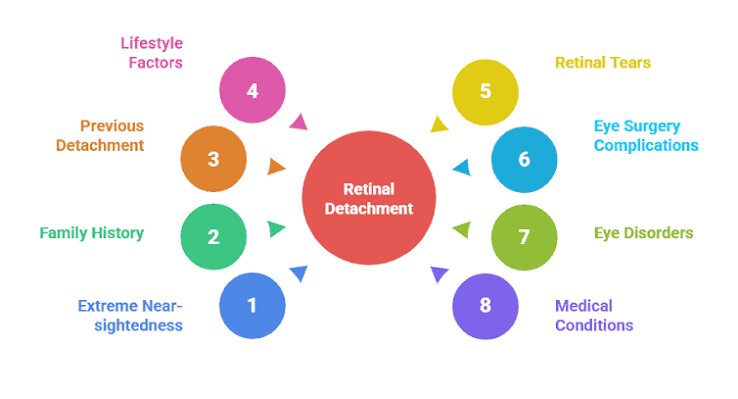
Retinal detachment doesn't usually happen without warning. Most cases can be traced back to one of a small number of underlying risk factors.
- Retinal tears or holes, which allow fluid to accumulate beneath the retina and gradually lift it away.
- High myopia, since a longer, more elongated eyeball thins the retina and makes tears more likely.
- Previous cataract surgery, which carries a small but recognised increase in detachment risk, particularly in the following months.
- Eye trauma, including a direct blow or injury during sports.
- Advanced diabetic retinopathy, where abnormal blood vessels and scar tissue can pull on the retina over time.
- Lattice degeneration, a thinning of the peripheral retina that makes it more prone to tearing.
- Family history of retinal detachment, which raises risk even without other factors present.
- Age-related vitreous shrinkage, as the gel inside the eye pulls away from the retina and occasionally tugs hard enough to cause a tear.
When a retinal tear is caught before it progresses to full detachment, it can often be sealed with a quick outpatient procedure. Our guide on barrage laser surgery explains how this is done and why early detection makes such a difference to the outcome.
What Are the Warning Signs of Retinal Detachment?
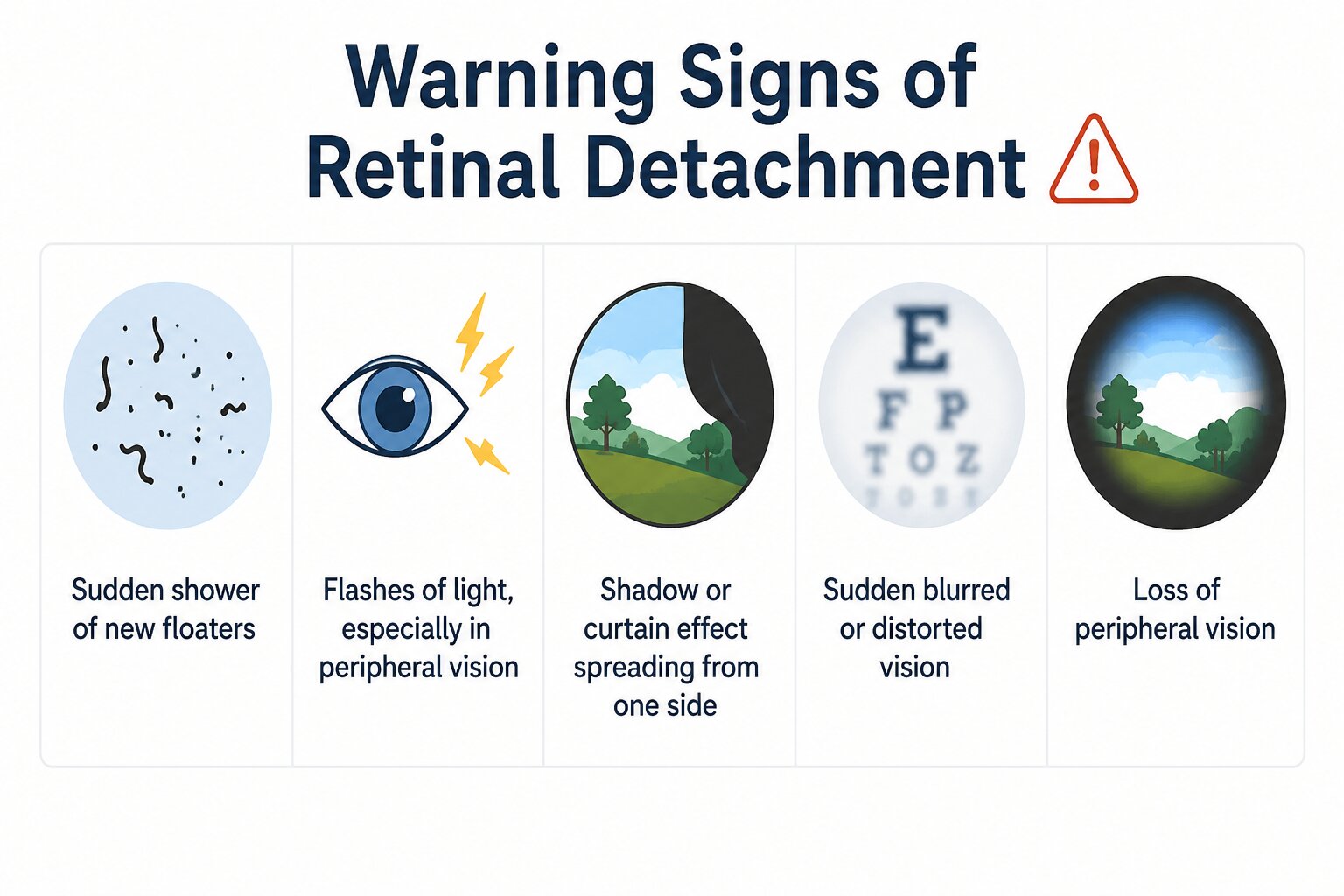
Retinal detachment tends to announce itself through a specific set of visual changes, and recognising them early is often the single biggest factor in preserving vision.
Warning signs include:
- A sudden shower of new floaters, appearing as a cluster rather than the occasional single floater.
- Flashes of light, especially in the peripheral vision, even with the eyes closed.
- A shadow or curtain effect, spreading from one side of your vision inward.
- Sudden blurred or distorted vision, without an obvious cause.
- Loss of peripheral vision, which can go unnoticed until it advances closer to central vision.
Any one of these on its own is worth getting checked. Several appearing together, particularly a spreading shadow, is an emergency.
Seeing flashes, floaters, or a shadow in your vision? Don't wait for it to settle on its own. Book an Appointment or call +91 75064 99962
How Is Retinal Detachment Diagnosed?
Diagnosis needs to happen quickly, since the extent and location of the detachment directly shape the treatment plan and the urgency behind it.
- Dilated fundus examination, allowing a direct view of the retina and any tears or areas of detachment.
- Optical Coherence Tomography (OCT), used to assess fine retinal detail, especially near the macula.
- Ultrasound B-scan, used when bleeding or a cataract makes it difficult to view the retina directly.
- Visual field and peripheral vision testing, to map how much of the retina's function has already been affected.
The involvement of the macula, the central part of the retina responsible for sharp vision, is one of the most important factors your specialist will check, since it strongly influences both urgency and expected visual recovery.
How Is Retinal Detachment Treated?
Treatment depends on the type of detachment and how far it has progressed. Nearly all cases require prompt surgical intervention rather than observation.
| Type / Severity | Typical Treatment |
|---|---|
| Small retinal tear, not yet detached | Barrage laser or cryotherapy to seal the tear |
| Limited rhegmatogenous detachment | Pneumatic retinopexy (gas bubble) or scleral buckle surgery |
| Extensive or complex detachment | Vitrectomy surgery to reattach the retina |
| Tractional detachment (diabetic) | Vitrectomy with removal of scar tissue |
| Exudative detachment | Treatment of the underlying cause, such as inflammation or a tumour |
Surgical outcomes are strongly linked to timing. Detachments treated before the macula is involved have a significantly better chance of restoring near-normal vision compared to those caught after central vision is already affected. Kenia Eye Hospital's retina clinic in Mumbai is equipped to assess and manage the full range of these presentations under one roof.
When Should You See a Doctor for Retinal Detachment?
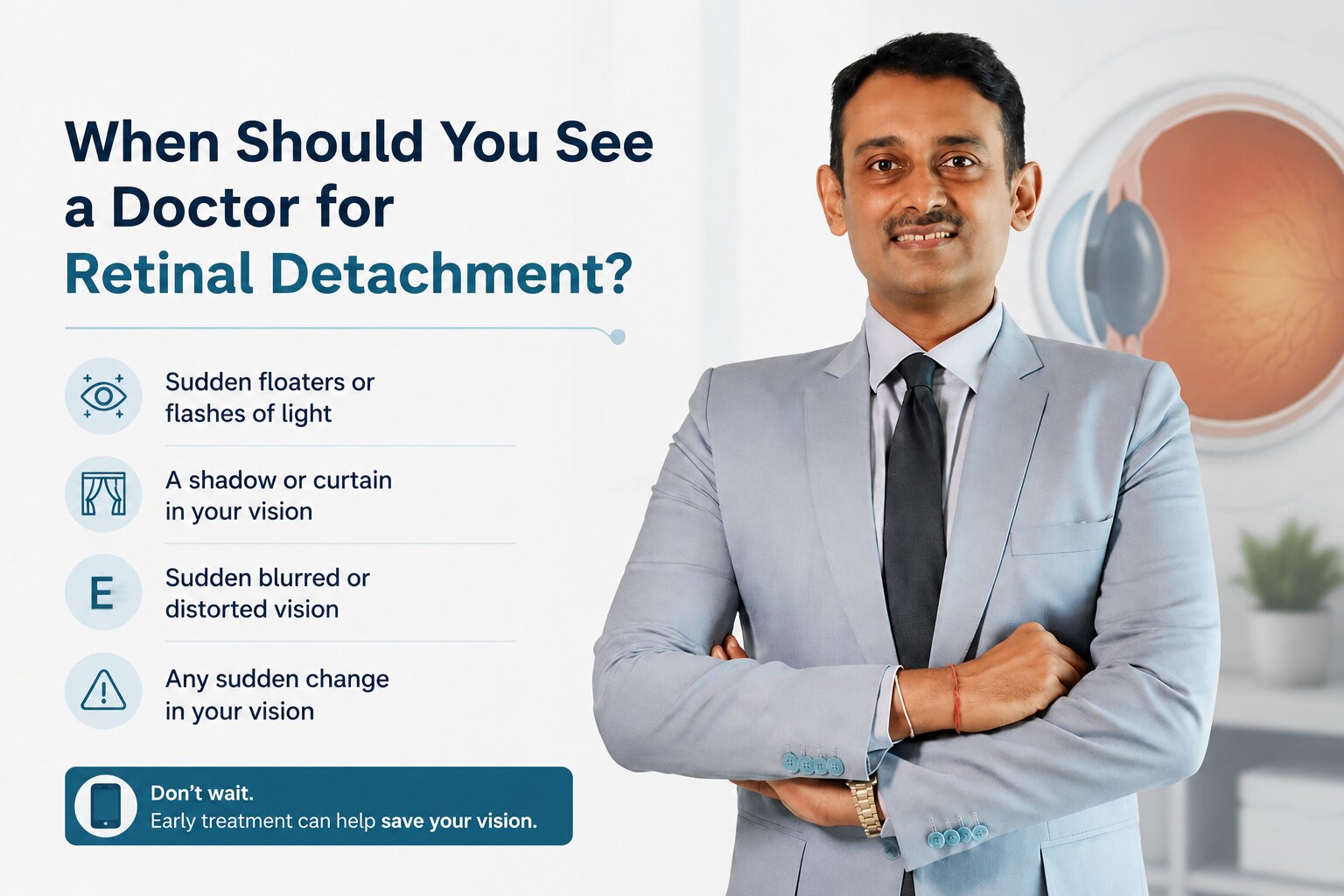
Retinal detachment is one of the few genuine emergencies in eye care, and the guidance here is simple: don't wait to see if it settles.
See a specialist immediately if you notice:
- A sudden increase in floaters, particularly a shower or cluster appearing at once.
- New flashes of light, especially at the edges of your vision.
- A shadow, dark curtain, or grey area spreading across your field of vision.
- A sudden, unexplained drop in vision.
- Any combination of the above following a recent eye injury.
If you're unsure whether what you're experiencing counts as a warning sign, our guide on eye floaters breaks down when floaters are ordinary and when they need urgent attention. When in doubt with retinal symptoms, treat it as an emergency rather than something to monitor overnight.
Why Choose Kenia Eye Hospital for Retinal Detachment Care?
Retinal detachment outcomes are decided in hours, not days, which makes fast access to an experienced retina team essential. Kenia Eye Hospital brings 28 years of experience in retinal diagnosis and surgery, supported by OCT imaging, ultrasound B-scan, and the surgical facilities needed to manage everything from a small retinal tear to a complex detachment involving the macula.
Patients also have access to 24x7 emergency eye care, which is exactly what a suspected retinal detachment calls for. That combination of surgical expertise and round-the-clock access is what places Kenia among the best eye hospital in Mumbai choices for retinal emergencies.
Experiencing flashes, floaters, or a shadow in your vision? This needs same-day attention. Book an Appointment or call +91 75064 99962
