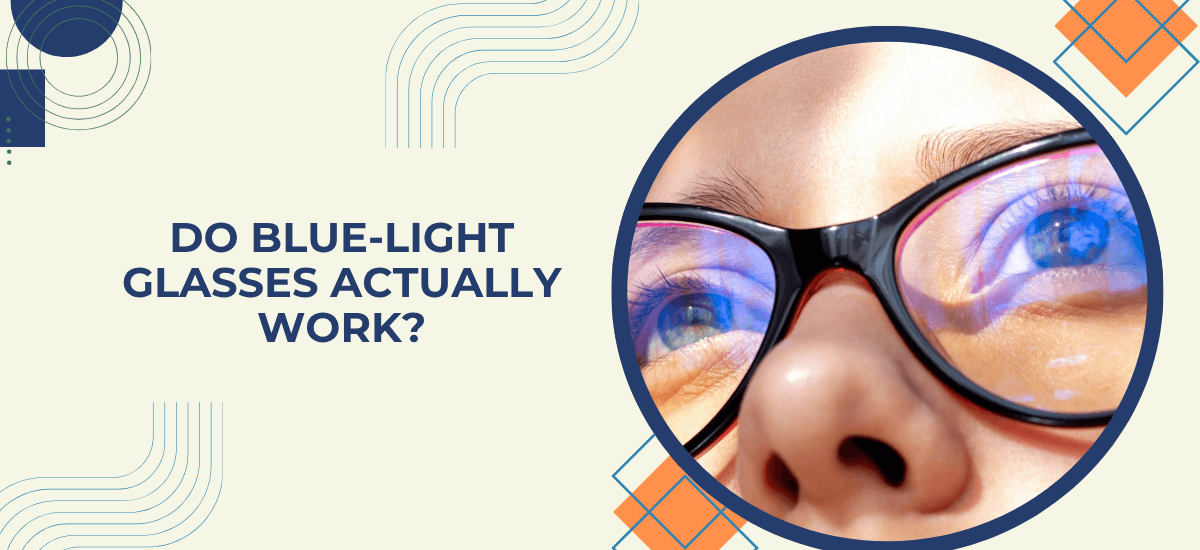
Blue-light glasses have not been shown to meaningfully reduce digital eye strain in controlled clinical research. A 2023 Cochrane review of 17 randomized trials found no significant difference in eye strain, visual performance, or sleep quality between blue-light filtering lenses and standard lenses. Most screen-related discomfort actually comes from reduced blink rate and prolonged near-focus effort rather than blue light exposure itself. The evidence for a sleep benefit is stronger, but mainly in specific groups like teenagers or people with existing sleep disorders.
Dr. Vaishal Kenia, Chairman and Medical Director at Eye Hospital in Mumbai, hears this expectation often: patients assume blue-light lenses will fix their screen fatigue on their own. In clinic, though, the bigger factor is almost always blink rate and screen distance, not the light itself, and that's usually where the real fix is found.
Wondering if your screen headaches are actually about blue light or something else entirely? Book Appointment
Why Doesn't the Evidence Support Blue-Light Glasses?
Large-scale reviews consistently find that blue-light filtering lenses don't outperform regular lenses for common screen-related complaints.
- Cochrane Review: The 2023 analysis pooling multiple trials found blue-light lenses probably make no real difference to eye strain or sleep compared to lenses without the filter, and that finding has held up in later research.
- Actual Cause: Digital eye strain is driven mainly by incomplete blinking during screen use along with sustained near-focus effort, both of which have nothing to do with the wavelength of light hitting the eye.
- Lens Variability: How much blue light a lens actually filters differs enormously between brands, and even the ones that filter the most still don't translate into measurable symptom relief in trials.
- Sleep Exception: There's somewhat better evidence for wearing amber or blue-blocking lenses in the evening to help with sleep onset, though this benefit is strongest in teenagers and people already dealing with sleep disruption.
None of this means screens are harmless, and the retina clinic evaluation looks at the actual cause of screen fatigue rather than assuming blue light is to blame by default.
What Actually Helps with Digital Eye Strain?
Since blink rate and near-focus fatigue are the real drivers, the fixes that work focus there instead of on lens tint.
- Blink Consciously: People don't actually blink less often at a screen, it's the quality of each blink that drops, and that's what dries the eye out over a long session. Making blinks fuller and more deliberate helps more than most people expect.
- 20-20-20 Rule: Every twenty minutes, look at something roughly twenty feet away for twenty seconds. It sounds almost too simple, but it genuinely gives the eye's focusing muscles a real break during long stretches of near work.
- Screen Distance: An arm's length away is about right. Anything closer and the eye has to sustain more focusing effort than it's really built for, so nudging the screen back a few inches often eases fatigue on its own, and a dry eye evaluation is worth considering if that still doesn't cut it.
- Ambient Lighting: Glare and harsh overhead light cause more squinting than screens ever do. Fixing the room's lighting, not the lens tint, is usually what actually moves the needle.
None of this is about willpower, it's just habit, and fixing the actual behavior behind screen fatigue tends to help far more than switching lens tint ever will. The same logic applies elsewhere too: understanding what's really behind watery eyes matters more than just treating the symptom in front of you.
Why Choose Kenia Eye Hospital?
Kenia Eye Hospital has over two decades of experience in comprehensive ophthalmology and dry eye management, led by Dr. Vaishal Kenia, Chairman and Medical Director. The team has evaluated thousands of patients with screen-related eye complaints, identifying the actual cause rather than defaulting to a blue-light explanation.
Patients who address blink habits, screen distance, and underlying dryness see real improvement, often within weeks, while lens tint alone rarely moves the needle. Getting the right diagnosis matters more than the accessory.
Call +91 75064 99962 to book your consultation.
