
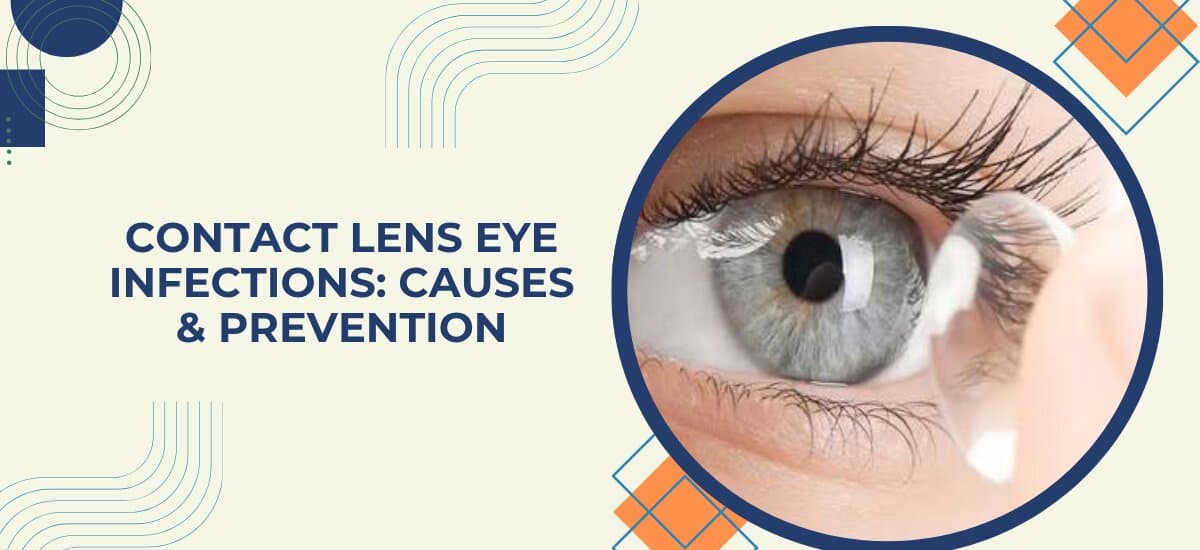
A contact lens eye infection is an infection of the cornea that develops when bacteria, fungi, or amoebae multiply on the eye's surface because of a contact lens. It is most often caused by poor lens hygiene such as tap water exposure, sleeping in lenses not approved for overnight wear, wearing lenses past their replacement schedule, or reusing old lens solution. Treatment depends on identifying the exact organism responsible, since a contact lens infection can range from mild surface irritation to a sight-threatening corneal ulcer if left unaddressed.
Mild irritation at the end of a long day in lenses is common and usually harmless. Persistent pain, worsening redness, or blurred vision is different, and it almost always points to an infection that needs proper evaluation at an Eye Hospital in Mumbai rather than being managed with rewetting drops alone.
"I see two kinds of contact lens infections in clinic. The first responds well because the patient came in on day one, the moment their eye felt wrong. The second is harder to treat, simply because someone waited three or four days hoping a red eye would settle on its own. With lens wearers, that delay is the real risk, not the lens itself." — Dr. Vaishal Kenia, Chairman and Medical Director, Kenia Eye Hospital
What Is a Contact Lens Eye Infection?
A healthy cornea has natural defences, tears, blinking, and a smooth surface, that keep microorganisms from settling in. A contact lens interrupts all three, reducing the oxygen reaching the cornea, trapping tears and debris underneath it, and giving microorganisms a surface to cling to and multiply on.
The condition can appear in three broad patterns:
- Acute bacterial infection, often striking within a day or two of a hygiene lapse such as tap water exposure or overnight wear.
- Chronic low-grade irritation, building slowly from protein deposits and poor lens care, more inflammatory than infectious.
- Rare parasitic or fungal infection, tied to specific exposures like swimming pools, contaminated water, or plant matter injury, and typically slower to appear but far harder to treat.
Each pattern points to a different underlying cause, which is why a careful eye examination is the first real step toward treatment.
Concerned about redness or irritation from your lenses? Book a complete eye assessment with a specialist. Book an Appointment
What Causes Contact Lens Eye Infections?
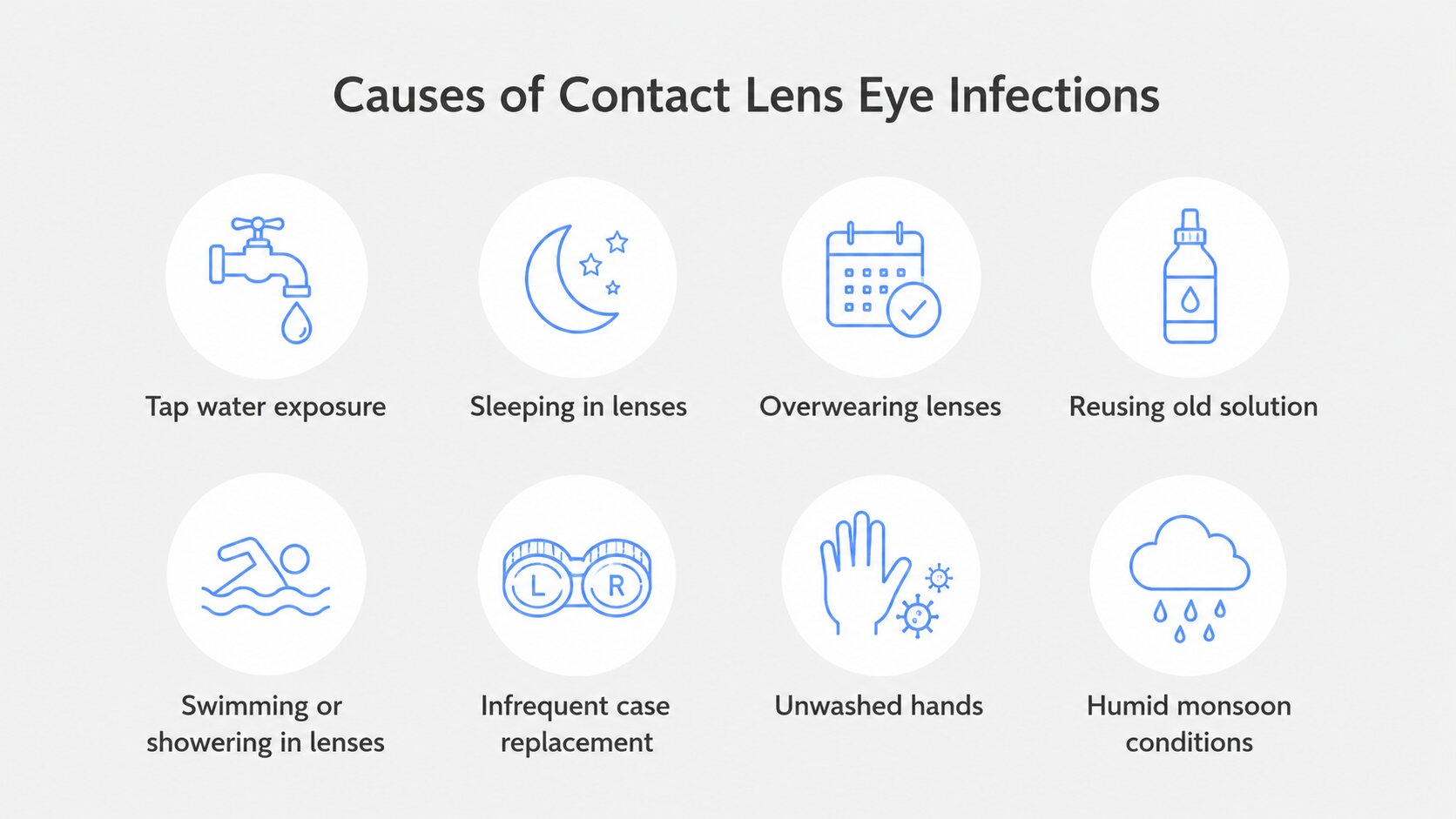
Contact lens infections have a fairly predictable list of causes, nearly all of them tied to how the lens is worn, cleaned, or stored. Most cases fall into one of the categories below.
- Tap water exposure. Rinsing lenses or the lens case with tap water is the leading cause of Acanthamoeba keratitis, a difficult-to-treat parasitic infection.
- Sleeping in lenses. Wearing lenses not approved for overnight use cuts oxygen to the cornea for hours and is one of the strongest risk factors for bacterial keratitis.
- Overwearing lenses. A monthly lens worn for two months accumulates deposits and biofilm well past what it was designed to handle.
- Reusing old solution. Topping up the case instead of emptying and refilling it lets bacteria multiply rather than killing them.
- Swimming or showering in lenses. Any water exposure while lenses are in place is a major infection trigger.
- Infrequent case replacement. Lens cases harbour bacteria even when rinsed, and should not be used indefinitely.
- Unwashed hands. Bacteria transfer from fingers to lens to eye within seconds of handling.
- Humid, monsoon-heavy conditions. Mumbai's monsoon months see a seasonal rise in fungal and bacterial keratitis linked to lens wear.
If you've been managing irritation with contact lenses for a while, our guide on contact lenses versus glasses explains when switching back to glasses, even temporarily, is the safer option for your eyes.
What Are the Symptoms That Come With a Contact Lens Infection?
A contact lens infection rarely stays silent. The combination of symptoms usually points to how serious the infection is and how quickly it needs attention.
Common symptoms include:
- Eye pain that doesn't ease when the lens is removed, often the clearest sign something is wrong beyond normal dryness.
- Redness that worsens rather than settles, especially within a few hours of lens removal.
- Blurred vision or a visible white or grey spot on the cornea, which suggests the infection has reached deeper tissue.
- Excessive watering or discharge, particularly with a thicker, sticky quality.
- Unusual light sensitivity, common with corneal involvement.
- A persistent foreign-body sensation, continuing even after the lens is out.
If pain and redness appear together, especially with blurred vision, this needs same-day evaluation rather than a wait-and-watch approach.
Worried your symptoms need urgent attention? Don't wait it out. Book an Appointment or call +91 75064 99962
How Is a Contact Lens Infection Diagnosed?
There is no single test that confirms a contact lens infection. Diagnosis is built around identifying the organism involved, since bacterial, fungal, and amoebic infections all need different treatment.
- History taking to establish lens-wearing habits, recent water exposure, and how long symptoms have been present.
- Slit-lamp examination to assess the extent of corneal involvement and look for an ulcer or infiltrate.
- Corneal staining with fluorescein dye to highlight any breaks in the corneal surface.
- Corneal scraping and culture, taken when a visible ulcer or suspected microbial keratitis is present, to identify the exact organism.
- Specular microscopy, used in select cases to assess the health of the innermost corneal layer.
The goal is to be confident about the causative organism before starting treatment, since a delay or a wrong first-line antibiotic can allow the infection to progress.
How Is a Contact Lens Infection Treated?
Treatment depends entirely on the organism identified. There is no single drop that treats every contact lens infection.
| Underlying Cause | Typical Treatment |
|---|---|
| Bacterial keratitis | Intensive antibiotic eye drops, often hourly in early stages |
| Acanthamoeba keratitis | Prolonged anti-amoebic therapy, sometimes over several months |
| Fungal keratitis | Targeted antifungal drops with close follow-up |
| Giant Papillary Conjunctivitis (GPC) | Lens discontinuation, anti-inflammatory drops, switch to daily disposables |
| Severe corneal scarring | Corneal treatment or transplant when vision is significantly affected |
Alongside medical treatment, switching to glasses during recovery and reviewing lens type and wearing schedule afterward both help prevent a repeat episode. For patients with corneal scarring that affects vision, corneal treatment in Mumbai covers options ranging from medical management to transplant.
When Should You See a Doctor for a Contact Lens Infection?
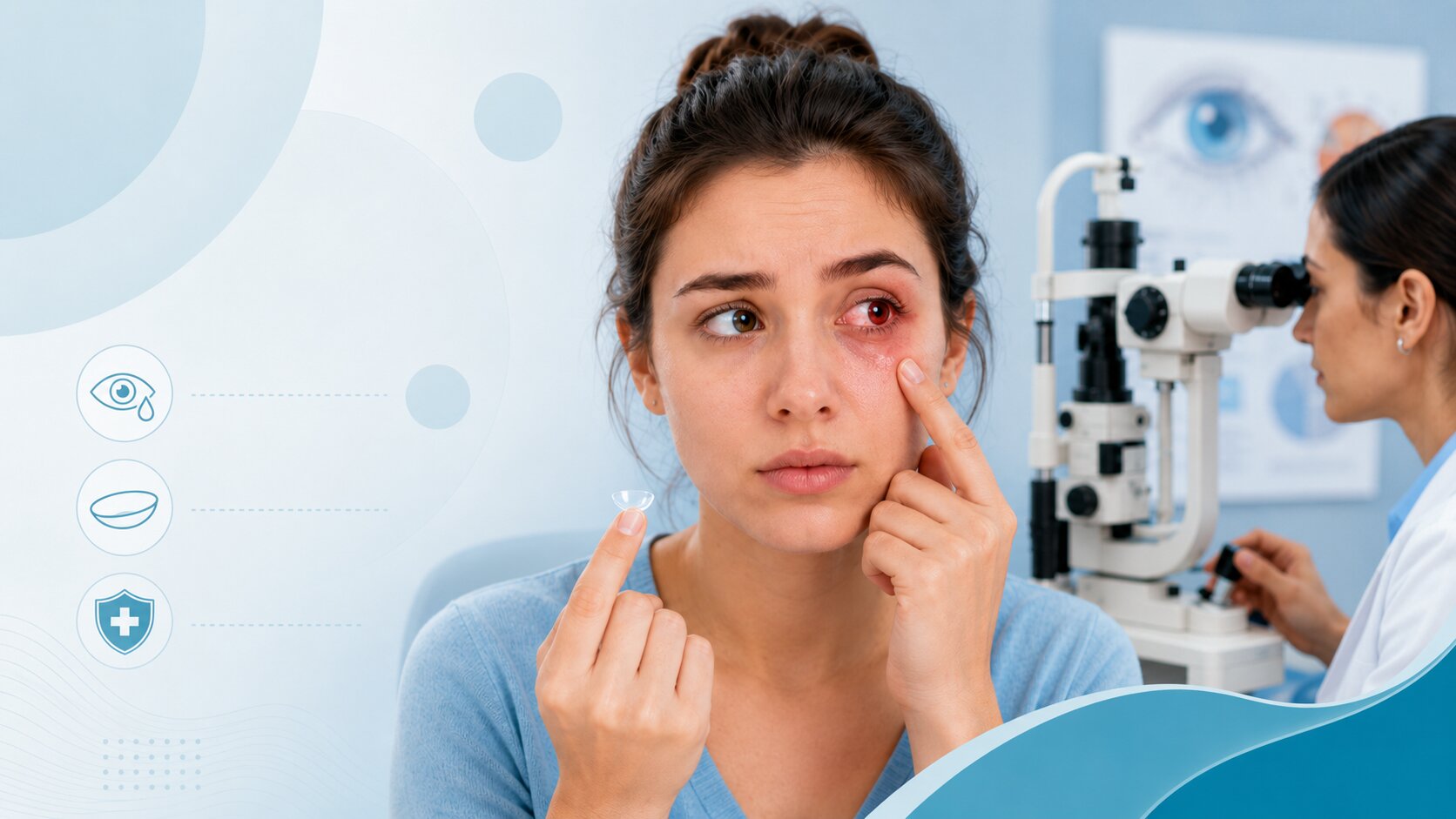
Mild, occasional dryness at the end of the day is normal. The following signs mean it's time for a proper evaluation rather than home care.
- Eye pain that persists after the lens is removed.
- Redness that worsens over a few hours instead of settling.
- Blurred vision or a visible spot on the cornea.
- Discharge that is thick, sticky, or unusual in colour.
- Symptoms that follow water exposure, swimming, or overnight lens wear.
- Any contact lens–related symptom that hasn't improved within 24 hours.
Severe pain, sudden vision loss, or a visibly white or grey area on the cornea should be treated as an emergency rather than a routine appointment.
Youtube link- https://www.youtube.com/watch?v=MhfwlHxM_rY&pp=0gcJCZkLAYcqIYzv
Why Choose Kenia Eye Hospital for Contact Lens Infection Care?
Contact lens infections can move quickly, which is why diagnosis depends on having both the right equipment and an experienced clinician reading it correctly from the first visit. Kenia Eye Hospital brings 28 years of experience in cornea and ocular surface care, supported by slit-lamp biomicroscopy, specular microscopy, and corneal culture facilities.
Patients also have access to 24x7 emergency eye care, which matters most in exactly this kind of situation, where a same-day assessment can be the difference between a short course of drops and a much longer recovery. That combination of experience, diagnostics, and emergency access is what places Kenia among the best eye hospital in Mumbai choices for contact lens wearers who need fast, accurate care.
Find out what's behind your eye irritation with a proper expert evaluation. Book an Appointment or call +91 75064 99962
