

Barrage laser recovery happens in two different timeframes that often get confused. Comfort returns within a day or two, with blurry vision, light sensitivity, and mild heaviness settling quickly. The retinal seal itself, the actual protective barrier the laser is creating, takes two to six weeks to fully form. Treatment during this period is mostly about protecting that seal, since the laser spots need time to heal into a firm ring around the weak area.
Mild grittiness or light sensitivity for a day or two is expected and harmless. A sudden increase in floaters, new flashes of light, or a shadow spreading across your vision during recovery is different, and it needs same-day evaluation at an Eye Hospital in Mumbai rather than being written off as normal healing.
"Patients often assume that once their vision clears, the job is done. It isn't. The laser spots need weeks to mature into a proper seal, and that's exactly the window where a patient's daily habits, whether they rub the eye, skip a follow-up, or ignore a new symptom, matter most. Recovery from barrage laser is quiet, but it isn't instant." — Dr. Vaishal Kenia, Chairman and Medical Director, Kenia Eye Hospital
What Is the Normal Recovery Timeline After Barrage Laser?
Barrage laser recovery generally follows three overlapping phases, and understanding the difference between them prevents most of the confusion patients have afterward.
- Immediate comfort recovery, within hours to a day, as blurred vision and glare from the dilating drops wear off.
- Short-term symptom settling, over the first week, as light sensitivity, mild heaviness, and any residual flashes reduce.
- Retinal seal formation, over two to six weeks, as the laser spots mature into the firm scar tissue that actually protects against retinal detachment.
The eye can look and feel completely normal well before that third phase is complete, which is exactly why post-laser precautions matter even after symptoms disappear.
Recovering from barrage laser and unsure what's normal? Get a proper check. Book an Appointment
What Happens During Barrage Laser Recovery, Day by Day?
Recovery unfolds in a fairly predictable sequence for most patients, though the exact pace depends on the size and location of the treated area.
- Day 0 (right after the procedure). Vision is blurred from dilating drops, glare is high, and the eye may feel gritty. Rest is advised for the remainder of the day, with no driving.
- Day 1 to 2. Blurring from dilation clears, though mild light sensitivity and a heavy or scratchy feeling in the eye are common. Most patients resume light daily activities.
- Day 3 to 7. Comfort largely returns to normal. Occasional flashes or a few new floaters can still appear during this window as the eye settles, and this is usually expected rather than alarming.
- Week 2 to 4. The laser spots progress from fresh burns to maturing scar tissue. Heavy exercise, swimming, and activities that jolt the head are still best avoided during this stretch.
- Week 4 to 6. The retinal seal is typically fully formed by this point, and your specialist will usually confirm this at a follow-up dilated examination before clearing you for unrestricted activity.
If you're still working out whether barrage laser is the right treatment for your retina in the first place, our guide on barrage laser surgery covers what the procedure involves and why it's advised.
What Symptoms Are Normal During Recovery?
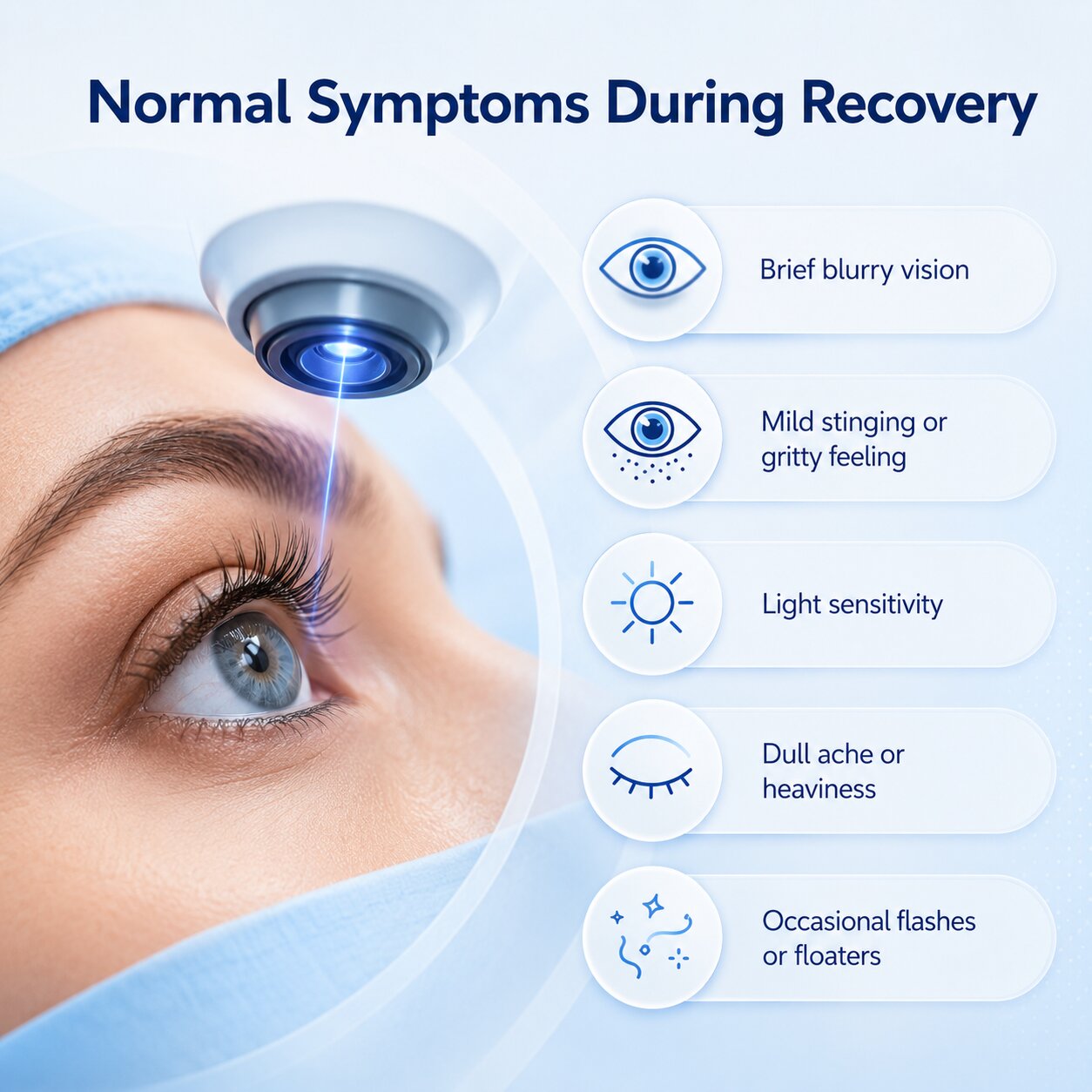
Some discomfort and visual disturbance is expected in the days after barrage laser. Knowing what's routine helps you focus on the signs that actually need attention.
Normal recovery symptoms include:
- Blurry vision for a few hours, caused by the dilating drops rather than the laser itself.
- Mild stinging or a gritty sensation, usually settling within a day or two.
- Light sensitivity, common for the first several days.
- A heaviness or dull ache in the treated eye, which typically fades within the first week.
- Occasional flashes or a few floaters, which can continue intermittently for one to two weeks as the eye adjusts.
These symptoms should be gradually improving, not worsening. A pattern that trends in the wrong direction is the signal to get checked rather than wait it out.
Not sure if your symptoms are within the normal range? A quick check settles it. Book an Appointment or call +91 75064 99962
How Is Recovery Progress Monitored?
There's no single marker that confirms recovery is on track. Your specialist builds that picture over one or more follow-up visits.
- Dilated retinal examination to directly view the treated area and confirm the seal is forming correctly.
- Comparison against the original laser markings to check that no new tears or breaks have appeared nearby.
- Symptom review at each visit, since a changing symptom pattern is often the earliest clue something needs a closer look.
- OCT imaging, used in select cases to assess the retina in finer detail when the view is unclear or the case is more complex.
Most patients need at least one follow-up visit within the first few weeks, with the exact schedule depending on the size and location of the treated area.
What Can Slow Down or Disrupt Barrage Laser Recovery?
Recovery pace varies from patient to patient. A few factors make the biggest difference to how smoothly, and how quickly, that retinal seal forms.
| Factor | Effect on Recovery |
|---|---|
| Skipping prescribed eye drops | Slower healing and higher risk of inflammation around the treated area |
| Heavy exercise or weightlifting too soon | Raises the chance of a new tear before the seal has matured |
| Rubbing or pressing on the eye | Can disturb the healing laser spots directly |
| Swimming or water sports before clearance | Introduces infection risk while the eye surface is still settling |
| Missing the follow-up visit | Delays catching a new break or incomplete seal early |
| High myopia or extensive lattice degeneration | Naturally extends the healing window and follow-up schedule |
Most of these are within the patient's control, which is why the post-laser instructions matter as much as the procedure itself.
When Should You See a Doctor During Recovery?

A small amount of fluctuation in symptoms during the first week or two is normal. The following signs are not, and they call for same-day review rather than waiting for the scheduled follow-up. If you're unsure whether what you're seeing counts as normal healing or a warning sign, our guide on eye floaters breaks down when floaters are harmless and when they need urgent attention.
- A sudden increase in floaters, especially if they appear as a shower or cluster.
- New flashes of light that are more frequent or intense than before.
- A shadow, curtain, or dark area appearing anywhere in your vision.
- Sudden or worsening pain, rather than the mild heaviness expected in the first few days.
- A noticeable drop in vision that doesn't improve within a day.
Any of these can signal a new retinal tear or early detachment, which needs urgent evaluation rather than a routine appointment.
Why Choose Kenia Eye Hospital for Barrage Laser Recovery Care?
Barrage laser is only half the treatment. The weeks that follow, while the retinal seal matures, are just as important to how well the outcome holds. Kenia Eye Hospital's retina clinic in Mumbai brings 28 years of experience in retinal laser care, supported by dilated retinal examination and OCT imaging to track healing accurately at every follow-up.
Patients recovering from barrage laser also have access to 24x7 emergency eye care, which matters most in exactly the situation where a new symptom appears between scheduled visits. That combination of structured follow-up and emergency access is what places Kenia among the best eye hospital in Mumbai choices for patients recovering from retinal laser treatment.
Have a question about your barrage laser recovery? Speak with a specialist directly. Book an Appointment or call +91 75064 99962
