
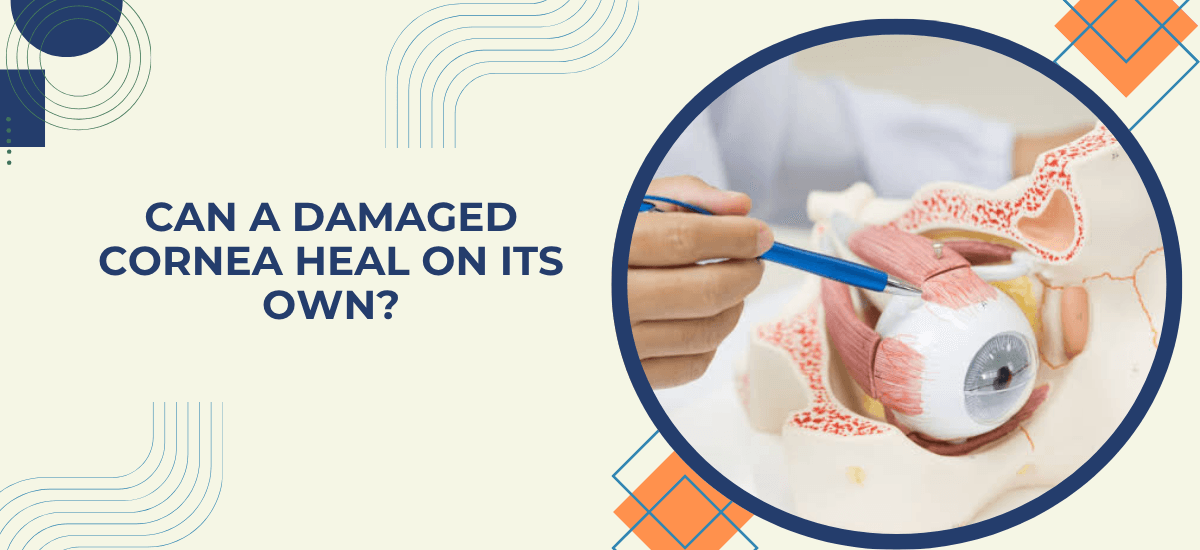
Yes a lot of the time it can. The cornea's actually one of the fastest healing tissues in the whole body, which surprises people when they hear it. But that healing ability depends heavily on which layer got hurt in the first place. A surface scratch, the kind you get from a fingernail or a stray eyelash, usually patches itself up in a day or two without much fuss. Deeper damage though, that's a different story entirely, and pretending it'll just sort itself out is where people run into real trouble.
Dr. Vaishal Kenia, Chairman and Medical Director at Eye Hospital in Mumbai, says: "People come in all the time thinking their eye just needs a day to rest and it'll fix itself, and honestly, for a shallow scratch, they're usually right. What worries me is when someone's had pain or blurry vision for four or five days and just waited it out. By then we're not talking about a scratch anymore, we're checking for scarring or infection that's actually going to affect their sight long term."
How Does the Cornea Actually Heal?
The epithelium, the outermost layer of the cornea, is the real star of fast healing. It's made of cells that regenerate constantly, so a shallow scratch here typically closes up within 24 to 72 hours on its own, sometimes with a bit of discomfort in the meantime but nothing serious.
The stroma, sitting underneath the epithelium, makes up most of the cornea's thickness and doesn't bounce back nearly as easily. Damage here can take weeks to heal and, worse, it can leave scar tissue behind that actually affects vision permanently, unlike the epithelium which heals clean.
The endothelium, the innermost layer, is where things get genuinely serious. These cells basically don't regenerate at all once damaged. This layer's job is pumping fluid out of the cornea to keep it clear, and if it's compromised, the cornea can swell and cloud up in a way that sometimes only a cornea treatment plan, or even a transplant, can fix.
Infection changes everything about the healing timeline. A scratch that gets infected stops being a simple healing situation and can turn into something like a corneal ulcer fast. Our earlier post on corneal ulcers covers just how quickly that particular complication can escalate.
When Does Cornea Damage Actually Need a Doctor?
Pain, redness, or blurry vision lasting more than a day or two past when a minor scratch should've healed is a sign something's not going the way it's supposed to. Epithelial injuries genuinely shouldn't drag on that long.
Anything involving a contact lens deserves extra caution, since lens related scratches carry a much higher infection risk than an accidental poke from a fingernail. If contacts are a regular part of your routine, it's worth reading through our post on contact lens hygiene too, since a lot of these injuries trace back to the same habits.
A visible white or grey spot on the cornea, or discharge coming from the eye, points toward infection rather than a simple scratch, and that combination needs treatment, not patience. Waiting here genuinely risks permanent vision loss.
Deeper injuries from something sharp, chemical exposure, or a significant blunt impact should get looked at regardless of how the eye feels right after. Diagnostic tools like Pentacam HR and specular microscopy can check how deep the damage actually goes, even when it's not obvious on the surface.
Why Choose Kenia Eye Hospital?
Kenia Eye Hospital has been treating patients in Santacruz (West), Mumbai since 1998, and telling the difference between a scratch that'll heal on its own and damage that needs real intervention is exactly the kind of call this team makes every day. Access to Pentacam HR, specular microscopy, and Anterion means the depth and severity of any corneal injury gets mapped properly instead of guessed at.
NABH, QAI, and FEQH accredited. CGHS empanelled. Call +91 75064 99962 or book a consultation if a corneal injury isn't settling down the way it should.
