
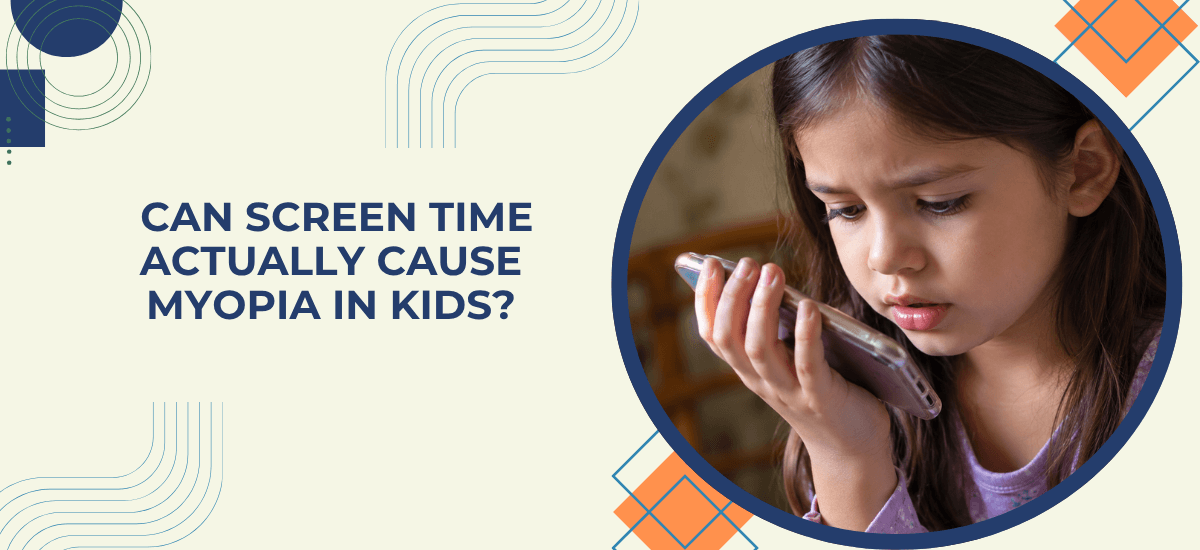
Yes,the numbers are honestly a bit more striking than most parents expect. High screen time on its own is linked to roughly a 30% higher risk of myopia in kids, and that jumps to around 80% higher when it's paired with heavy computer use on top of everything else. Genetics still play a massive role here, if both parents are nearsighted, a kid's odds go up regardless of screens. But screens aren't just innocent bystanders either. They're changing how kids actually use their eyes day to day, and that shift matters a lot more than people realize.
Dr. Vaishal Kenia, Chairman and Medical Director at Eye Hospital in Mumbai, says: "Parents ask me this constantly now, and honestly the science backs up their worry. It's not really about screens being some special villain, it's about what screens replace. Kids used to spend hours outside, looking at things far away, and now a lot of that time goes into close up focusing on a tablet or phone six inches from their face. That pattern, hour after hour, day after day, is exactly the kind of visual habit that pushes myopia along faster."
Why Does Screen Time Actually Push Myopia Along?
Near work is the real mechanism here, not the screen itself technically. Focusing up close for hours straight, whether it's a phone, tablet, or book, makes the eye's shape adapt in a way that favors short sightedness over time, and screens just happen to be where a ton of near work now happens.
Less outdoor time comes packaged with more screen time, and that combination seems to matter as much as the screen use itself. Natural light and looking at things far away actually appear to slow myopia progression, so when screens eat into outdoor hours, kids lose that protective effect too.
Distance from the screen makes a real difference, and it's something a lot of parents don't think about. A phone held close consistently is a lot worse for this than, say, watching TV from across a room, since the up close focusing demand is what's driving the eye changes.
Genetics still set the baseline risk, and that part's not changing regardless of screen habits. Kids with myopic parents are always going to have higher odds, but heavy screen use on top of that genetic risk seems to accelerate things, which is really the concerning part for families with a family history already.
What Can Parents Actually Do About It?
The 20-20-20 rule genuinely helps, even if it sounds a bit gimmicky. Every 20 minutes, look at something 20 feet away for 20 seconds. It's a simple habit that gives the eye's focusing muscles an actual break during long screen sessions.
Getting kids outside more, even just an hour or two a day, has real backing behind it for slowing myopia progression, separate from just cutting screen time. It's honestly one of the more evidence backed, low effort things a family can do.
Regular eye checkups matter a lot here, since myopia can progress without a kid ever complaining about it, they just adapt to seeing worse without realizing it's not normal. Our earlier post on when a child should get their first eye checkup covers how often kids actually need to be seen.
If myopia's already showing up and progressing quickly, there are actual management options now, not just glasses that get stronger every year. The squint and paediatric clinic can talk through options aimed specifically at slowing progression rather than just correcting it after the fact.
Why Choose Kenia Eye Hospital?
Kenia Eye Hospital has been treating patients in Santacruz (West), Mumbai since 1998, and myopia in children gets tracked properly here, not just corrected with a stronger prescription every year without asking why it keeps changing. The paediatric team can tell whether a kid's myopia is progressing at a normal pace or accelerating, and that distinction actually changes what gets recommended.
NABH, QAI, and FEQH accredited. CGHS empanelled. Call +91 75064 99962 or book a consultation if your child's prescription keeps climbing or it's been a while since their last eye exam.
