
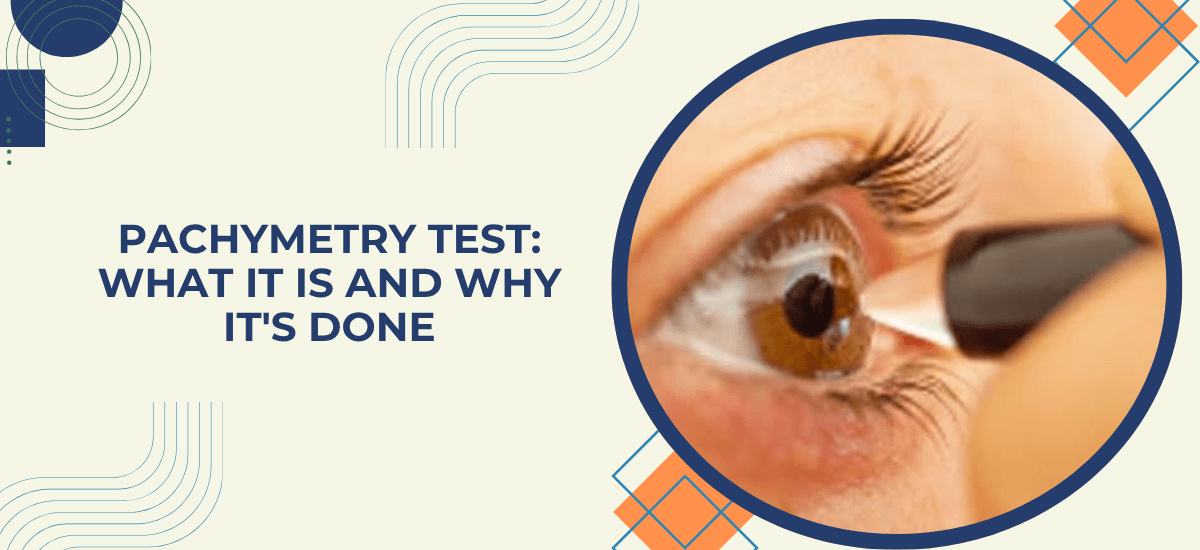
A pachymetry test measures corneal thickness. The scan takes only a few seconds per eye and causes no discomfort. It is typically ordered before LASIK or other refractive surgery, as part of glaucoma monitoring, or when checking for keratoconus. Corneal thickness affects both surgical safety and the accuracy of eye pressure readings. There is no dilation involved, and results are usually available the same visit.
A pachymetry reading taken during a routine eye check is common and simply establishes a baseline. A request to repeat the test, or a finding that the cornea is thinner than average, is a different matter. This is worth understanding in terms of candidacy for procedures like LASIK at an Eye Hospital in Mumbai, rather than assuming the worst.
"Corneal thickness is a number most patients never think about. It becomes relevant right before LASIK, or during a glaucoma work-up. It is a simple test. But it changes real decisions, how much corneal tissue can safely be reshaped during LASIK, or how an eye pressure reading gets interpreted. Skipping it isn't really an option for procedures where it matters." — Dr. Vaishal Kenia, Chairman and Medical Director, Kenia Eye Hospital
What Is a Pachymetry Test?
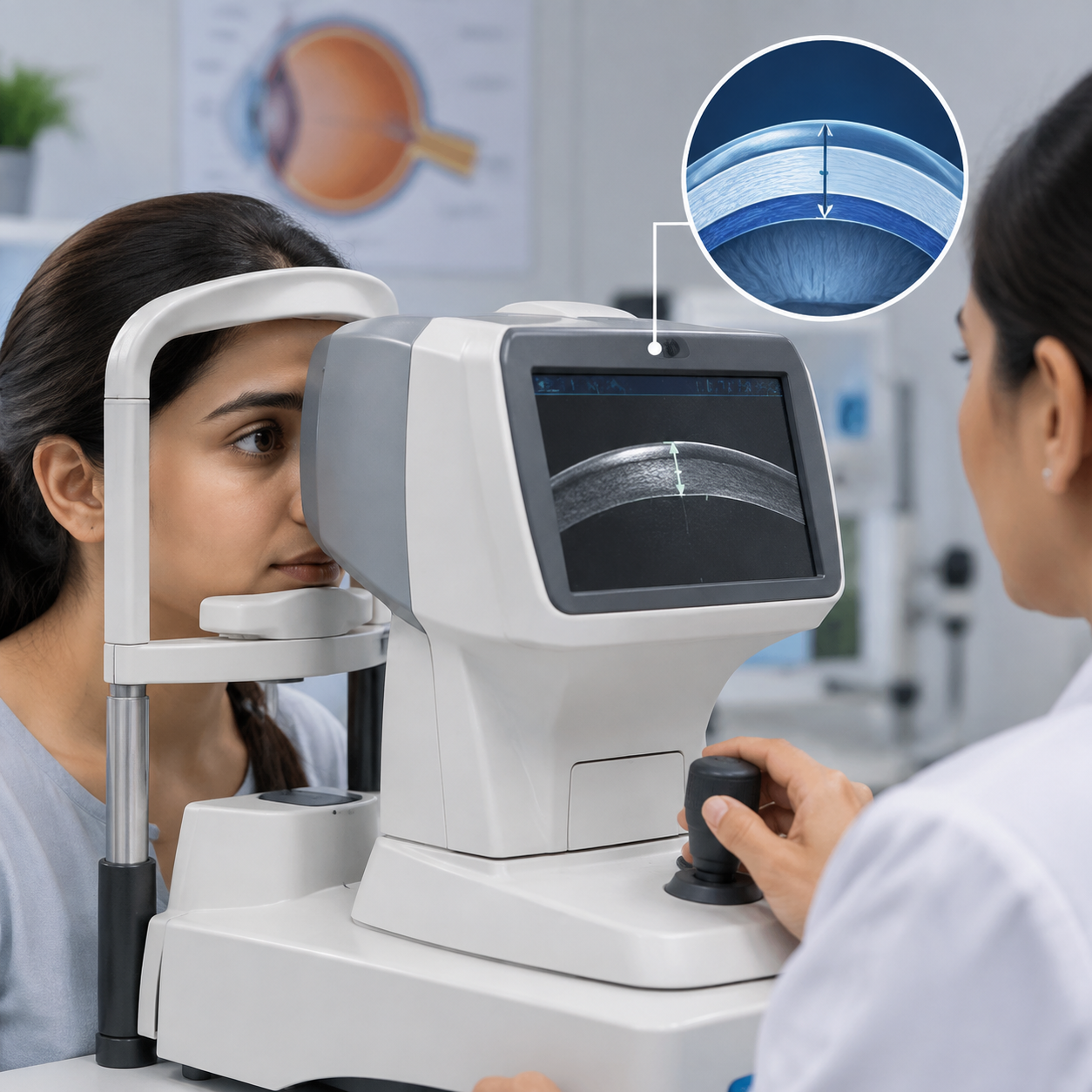
Pachymetry measures corneal thickness in microns, and this measurement influences decisions across several distinct areas of eye care, from refractive surgery planning to glaucoma diagnosis. There are two primary methods used:
- Ultrasound pachymetry. The more established approach, in which a small probe briefly touches the numbed cornea to take the reading. It remains widely used for its accuracy.
- Optical pachymetry. A newer, non-contact method that uses light-based imaging instead, often built into combination devices such as Pentacam, which map the cornea's shape and thickness in a single scan.
Both methods produce reliable readings. Which one is used typically depends on what other testing is being conducted in the same visit.
Curious whether your corneal thickness affects your candidacy for LASIK or another procedure? Get it checked properly. Book an Appointment
Why Is a Pachymetry Test Done?
Corneal thickness is relevant to a range of conditions, which is why pachymetry appears across several distinct areas of eye care rather than being tied to a single diagnosis:
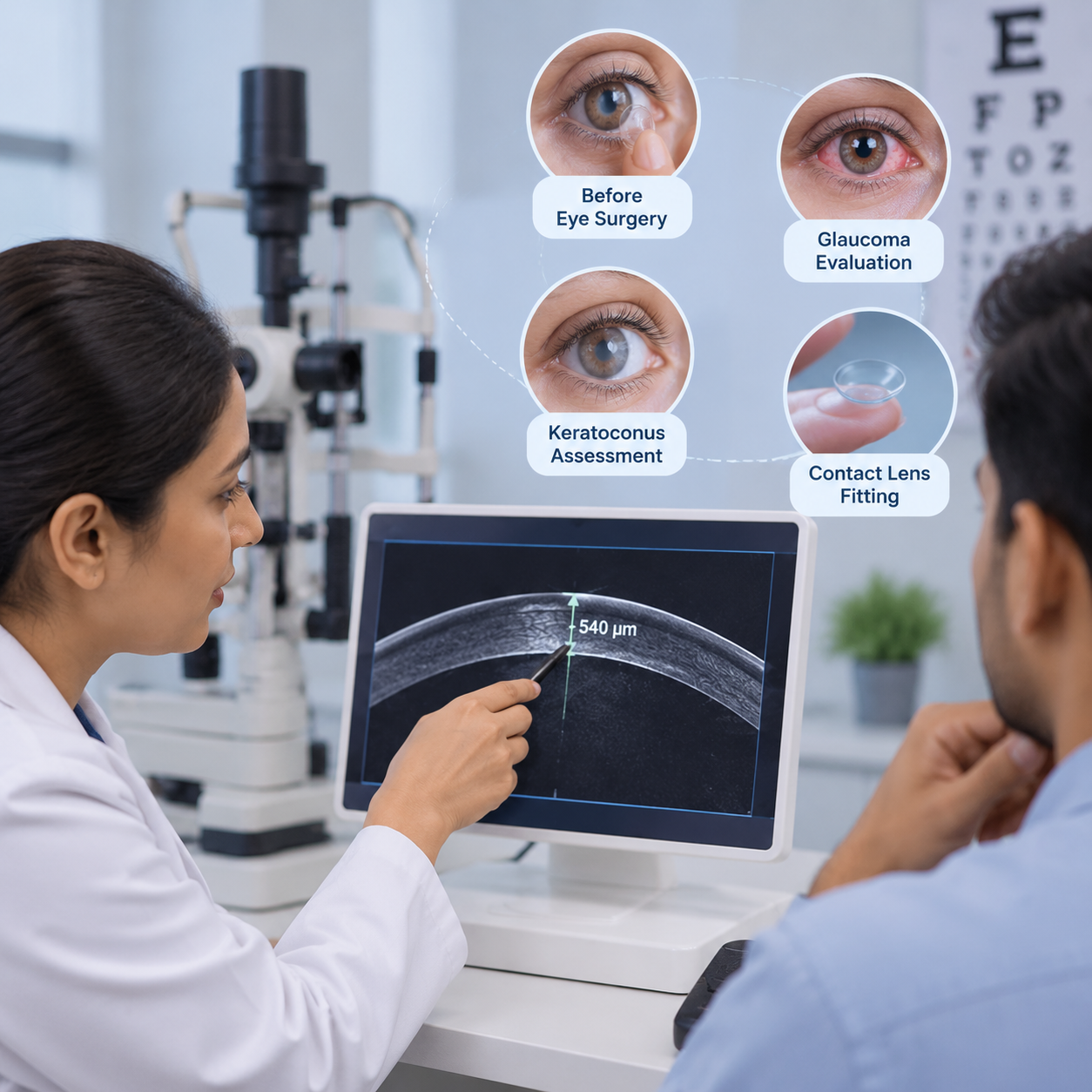
- Refractive surgery screening. Before LASIK or other refractive surgery, it confirms there is sufficient corneal tissue to reshape safely without weakening the underlying structure.
- Glaucoma management. It helps correct eye pressure readings, since a cornea that is thicker or thinner than average can cause intraocular pressure to read falsely high or low.
- Keratoconus screening. A thinning cornea is often one of the earliest measurable indicators, sometimes appearing before other symptoms become noticeable.
- Corneal surgery planning and monitoring. Tracking thickness over time helps identify problems early, both before certain procedures and during recovery from others.
If keratoconus is the reason for your visit, our guide on early keratoconus signs covers what else to watch for alongside a thinning cornea.
What Happens During a Pachymetry Test?
The test is brief and requires no preparation beyond numbing drops if the ultrasound method is used.
- Ultrasound method. Numbing drops are applied first, and a small probe is briefly placed against each eye to take the reading.
- Optical method. No drops or contact are required at all. The device scans the cornea using light while the patient simply looks into it.
- Either way. The test takes only a few seconds per eye, involves no dilation, and normal activity can resume immediately afterward.
Results are typically available during the same visit, and the specialist explains what the specific reading means for whatever procedure or condition is being evaluated.
Not sure if a pachymetry test is something you need? A quick consultation will tell you. Book an Appointment or call +91 75064 99962
How Are Pachymetry Results Interpreted?
A pachymetry reading on its own is only a number in microns. Its significance depends entirely on the reason the test was ordered.
| Corneal Thickness | What It Typically Means |
|---|---|
| Around 540 to 560 microns (average range) | Standard candidacy for most refractive procedures, no immediate concerns |
| Thinner than 500 microns | May limit LASIK eligibility and can be an early indicator of keratoconus risk |
| Thicker than 600 microns | Can cause eye pressure readings to appear falsely elevated, relevant in glaucoma screening |
These figures serve as general guidelines rather than fixed cutoffs, since the specialist evaluates pachymetry alongside other measurements, such as corneal mapping and eye pressure, rather than in isolation. If glaucoma monitoring is the reason for this test, our guide on glaucoma drops vs laser treatment explains how these figures factor into managing the condition.
When Should You Get a Pachymetry Test?
Pachymetry is not part of every routine eye check, but it is a standard step in several specific situations:
- Prior to LASIK, PRK, or other refractive surgery
- As part of ongoing monitoring for patients with or at risk of glaucoma
- When keratoconus is suspected based on other symptoms or family history
- Before certain corneal procedures where thickness affects surgical planning
- Whenever a specialist identifies it as necessary based on individual history
For patients already scheduled for a LASIK evaluation, pachymetry is typically one of several tests conducted in the same visit rather than a separate appointment.
Why Choose Kenia Eye Hospital for Pachymetry Testing?
A corneal thickness reading is only as useful as the interpretation applied to it. Kenia Eye Hospital brings more than 26 years of experience combining pachymetry with corneal mapping, glaucoma testing, and refractive surgery assessment, ensuring readings are never evaluated in isolation.
Patients also benefit from having pachymetry, along with any other required tests, completed in a single visit with results explained the same day. This combination of thorough testing and clear explanation is part of what places Kenia among the best eye hospital in Mumbai choices for LASIK evaluation and glaucoma care.
Ready to find out what your corneal thickness means for your eye health? Book a full evaluation. Book an Appointment or call +91 75064 99962
