
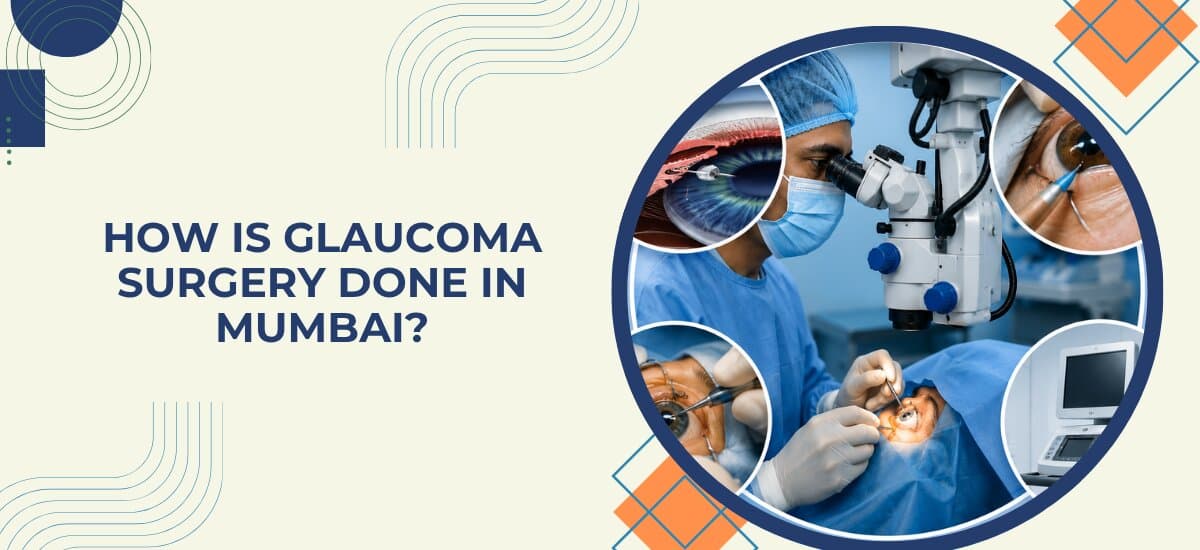
Glaucoma surgery in Mumbai is performed as a day procedure under local anaesthesia by specialist ophthalmologists. The aim is to reduce intraocular pressure and protect whatever vision remains. There's no single surgery for glaucoma, the right type depends on which kind you have, how advanced it is, and how the eye has responded to other treatments so far.
Walk into most glaucoma surgery consultations and patients expect something long and complicated. It usually isn't. No general anaesthesia, no overnight ward, no dramatic recovery. Eye gets numbed, procedure gets done, most people are home by afternoon. What actually differs from one patient to the next is what happens structurally inside the eye and which drainage problem needs solving.
Dr. Vaishal Kenia, Chairman and Medical Director at Eye Hospital in Mumbai, says: "Surgery for glaucoma is about creating a sustainable way for pressure to stay controlled. Whether that's a laser, a new drainage channel, or an implant depends entirely on the individual eye. There's no one-size answer, and rushing into surgery before other options are exhausted is rarely the right call."
What Are the Types of Glaucoma Surgery?
Glaucoma surgery covers a range of procedures, not a single operation. Which one is used depends on the type of glaucoma, the stage, and what's been tried before. Here's what each option actually involves:
Laser Treatment: Selective laser trabeculoplasty targets the drainage tissue inside the eye with a laser to improve fluid outflow. Done in the clinic, takes about ten minutes, no incisions. Usually the first surgical step for open-angle glaucoma in eyes where drops haven't achieved adequate control.
Laser Iridotomy: Specific to closed-angle glaucoma. A small opening is made in the iris to create an alternative drainage route. Used both after an acute attack and preventively in eyes where the anatomy puts them at risk of one.
Trabeculectomy: The most common incisional procedure. A small flap is made in the white of the eye and a new drainage channel is created, letting fluid bypass the blocked pathway and drain under the conjunctiva. Well-established and effective, though it needs careful monitoring in the weeks after.
Glaucoma Implant: A tiny drainage device is placed in the eye to maintain pressure control. Used when trabeculectomy has failed, isn't suitable, or where more predictable long-term control is needed. Recovery is slightly longer but follow-up can reduce over time.
For a detailed assessment of which option suits your condition, the glaucoma clinic at Kenia Eye Hospital runs a full diagnostic workup before any surgical decision is made.
What to Expect: Procedure, Recovery and Results
Recovery and results vary depending on which procedure was done. Here's what to expect at each stage:
During Surgery: Laser takes ten to fifteen minutes. Trabeculectomy and implant surgeries run thirty to sixty minutes. The eye is completely numb throughout. Most people feel pressure, not pain, and are done faster than expected.
After Laser: Back to routine the next day for most people. Minimal restrictions, a few follow-up visits to confirm pressure has responded well.
After Trabeculectomy: First few weeks need more attention. Eye will be red and irritable, vision can stay blurry while the drainage bleb settles. Eye drops continue on a strict schedule and the first month's follow-ups are not optional.
What Surgery Actually Does: Stabilises intraocular pressure. Vision already lost doesn't return. What changes is that further damage stops. Most patients continue some drops after surgery, though usually fewer than before.
Long-term: The drainage pathway can close over time as the eye heals naturally. That's why monitoring continues for years after surgery, not just in the first few months.
For a full breakdown of what surgery costs, the glaucoma surgery cost page covers it in detail.
Why Choose Kenia Eye Hospital
Kenia Eye Hospital has been at Santacruz (West), Mumbai since 1998. Glaucoma diagnosis and surgery has been part of the practice throughout those 28 years. Dr. Vaishal Kenia manages complex cases with a focus on the least invasive option that still achieves reliable pressure control. Pre-surgical workup covers tonometry, visual field testing, OCT of the optic nerve, and gonioscopy.
NABH, QAI, and FEQH accredited. CGHS empanelled. Written estimates are provided before treatment begins. Call +91 75064 99962 to book.
